

Introduction
Today, every enterprise handles complex tasks with constant data flow. These tasks demand speed, accuracy, and smooth coordination across teams. ServiceNow supports this need with a unified digital platform that manages workflows, automates steps, and connects systems. It removes manual effort and replaces it with clean logic and smart rules. It also helps teams track issues, manage service requests, monitor assets, and control processes. This structure is necessary for faster and reliable daily work. The ServiceNow Online Training program is designed to help learners build the best skill set relevant in modern industries.
How Does ServiceNow Make Work Easier?
Today, it is mandatory for companies to deal with large workflows every day. One needs speed, clarity, and clean automation for accuracy. ServiceNow offers a unified architecture that connects people, processes, and data within an organisation. Its cloud platform effectively eliminates the need for manual tasks for a smooth digital flow. It offers strong scripting power, deep integration features, and secure data models. It also uses a single data structure that reduces noise in daily work. These qualities help teams work fast with fewer errors and higher visibility.
1. Unified Platform Architecture
ServiceNow’s single-tenant cloud architecture isolates customer environments and keeps applications within a single data model. Fields, tables, and relationships across modules are us3d by this model. Developers can extend these tables without breaking system logic. The platform uses GlideRecord to interact with its database layer. GlideRecord supports server-side queries that follow predictable rules and strict schema design.
Syntax Example: GlideRecord Query
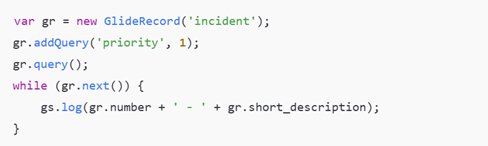
This syntax shows how ServiceNow pulls data from a priority-based filter. The platform processes this logic on the server so the performance stays stable.
2. Automation With Workflows and Flow Designer
Professionals eliminate the need for manual work with ServiceNow automated flows. Flow Designer helps users build sequences running rules, assignments, and notifications. Flow Designer uses a graphical interface, but it also supports server-side actions through Script Steps. These flows run in the background and reduce delays across the business. The platform uses triggers that activate flows when conditions match values inside the table. These triggers watch every update event and apply logic instantly.
Syntax Example: Flow Script Step
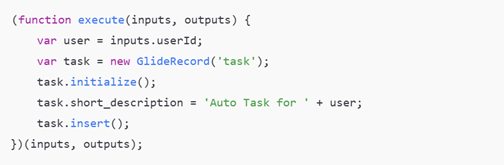
This syntax shows how a flow script builds a task automatically.
3. IT Service Management Layer
Daily work becomes easier with ServiceNow’s centralized IT service processes. The ITSM module uses Problem, Incident, Change, and Request tables. These tables follow strict workflows that match ITIL standards. From submission to closure, the entire lifecycle of an issue is under ITSM’s control. Moreover, the platform uses assignment rules to assign tasks to the correct group according to the circumstances. These rules are effective to keep the workload balanced. Furthermore, it uses SLAs to measure response and resolution times. The SLAs generate visibility for leaders to track team performance effectively.
4. CMDB and Dependency Mapping
The Configuration Management Database is needed to enhance enterprise visibility. It stores configuration items that describe servers, software, networks, and cloud systems. ServiceNow uses Discovery and Service Mapping to identify these components. It also maps relationships between them for a digital blueprint of the entire infrastructure. This blueprint enables teams to understand the impact of every incident clearly. Additionally, it helps change managers to reduce the risk of disruptions in the system. The Configuration Management Database automatically updates these relationships through regularly scheduled scans.
Syntax Example: CI Query

This syntax extracts active configuration items and prints each name with its class. The ServiceNow Training offers industry-relevant training for aspiring professionals for the best career development.
5. Integration Through APIs
ServiceNow supports smooth integration with external systems. It exposes REST and SOAP endpoints that follow open standards. Systems like AWS, Azure, Jira, and SAP send and receive data with these interfaces. Moreover, Outbound calls become easier with RESTMessageV2 API transforms authenticate sessions, payloads, and resolves responses easily. These capabilities are necessary to remove duplicate entry and unify enterprise systems.
Syntax Example: Outbound REST Call
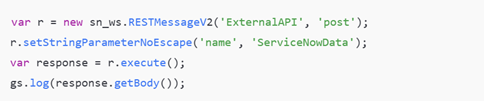
This syntax sends data to an external API and logs the output.
6. Security and Access Control
ServiceNow restricts data exposure within systems with role-based access control. The platform assigns roles that unlock operations like read, write, create, and delete. ACL rules inspect both object-level and field-level access. They evaluate conditions and scripts before allowing actions. This adds a strong security layer that protects workflows. It also supports encryption for fields that hold sensitive data. The system integrates with identity providers such as SAML, OAuth, and LDAP that use SAML. Servicenow Training In Hyderabad supports learners with practical labs and real project tasks for better job readiness.
Syntax Example: ACL Script

This simple script denies access when the user does not hold the required role.
7. Performance and Scalability
ServiceNow handles load effectively with multi-zone cloud regions. It distributes requests evenly across horizontally scaling nodes. The platform resolves frequent queries using caching systems. This caching improves the response time of list views and reports. Its asynchronous job engine runs heavy tasks without blocking the user session. This keeps the interface fast even when large updates run in the background.
Conclusion
ServiceNow makes work easier because it streamlines the entire digital flow inside the enterprise. It handles data, automation, workflow control, and integration under one platform. ServiceNow Admin Online Course builds deep knowledge of administration tasks, access control, scripting, and platform setup. ServiceNow uses scripting power that supports fast customization. It also uses a strong security framework that protects every process. Its unified model reduces complexity and improves visibility. These qualities help teams work with clean structure and stable automation. The enterprise gains speed because the platform reduces manual effort and supports clear control.
