


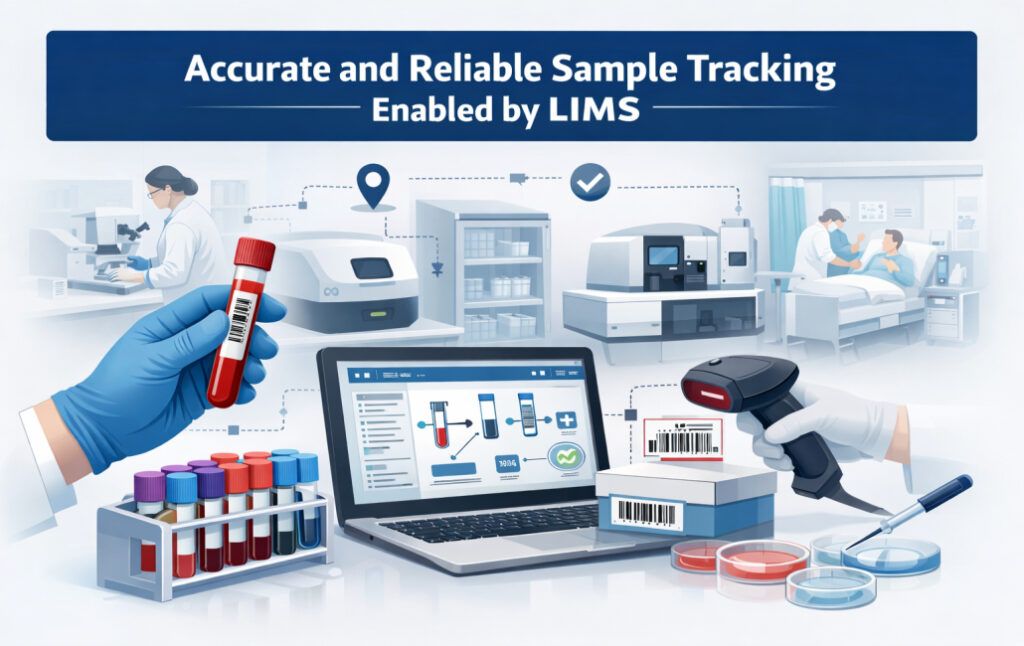
Introduction to Enhancing Sample Tracking with LIMS
The Laboratory Information Management System (LIMS) system in today’s healthcare environment enables precise and efficient sample tracking from the laboratory’s beginning to its end. Healthcare organizations use LIMS Laboratory Information Management System to track specimen movements and enhance sample processing and data integrity maintenance.
The combination of Modern Pathology Lab Software and Lab Management Information Systems helps laboratories operate more efficiently while decreasing mistakes and delivering immediate operational updates. The system improves both operational efficiency and patient outcomes through its capacity to deliver precise lab results in time.
Understanding the Role of LIMS
The Laboratory Information Management System (LIMS) serves as the fundamental system which enables laboratories to monitor and oversee their sample management processes throughout their research and clinical operations.
The Laboratory Information Management System LIMS enables laboratory staff to manage sample identifiers while they take responsibility for documentation processes and protect sensitive data. The Laboratory Billing Software functions together with LIMS to monitor laboratory expenses while it simplifies billing operations through its ability to decrease processing mistakes.
Laboratory information management systems deliver advantages which include improved processing times, decreased mistakes during sample handling and more efficient operational workflows which enable laboratories to function with high accuracy through the Lab Management Information System.
Sample Collection Process in LIMS
1. Order Placement and Requesting Samples
Order booking is used in the Laboratory Information Management System to ease the procedure of registering sample requests. Through incorporation of the LIMS Laboratory Information Management System, labs will be in a position to easily track and handle orders promptly, and therefore orders will be collected in time and chances of mismanagement of samples are minimized.
2. Sample Identification and Registration
A Lab Management Information System also uses accession to ensure that the samples are registered with identifiers allowing the sample tracking process to be simplified. The LIMS Laboratory Information Management System increases the accuracy of handling the samples and reduces the errors in the sample collection process.
3. Sample Preparation and Analysis
After the sample has been gathered, the Laboratory Information Management System starts working on it. The workflow is automated by the LIMS, which guarantees that each sample goes through the right procedure, and that tracking is done on its path, eliminating the possibility of human error and enhancing efficiency of operations.
4. Integration with Imaging Systems
Pathology Lab Software has an integrated Radiology Information System (RIS) that enables access to imaging information associated with the collection of samples. LIMS Laboratory Information Management System provides the labs with the opportunity to control diagnostic processes and to integrate the radiological results with sample monitoring.
Pathology and Lab Data Management
1. Generating Lab Reports Efficiently
The Laboratory Information Management System creates reports making the process of recording results to be accurate and efficient. The Pathology Lab Software is also compatible with the LIMS, meaning the software is capable of generating reports without any issues and the turnaround time of patient results is decreased.
2. Approval Workflow in Lab Systems
Lab Management Information System has the approval method whereby approved results can be approved digitally by the authorized personnel. This combined system in LIMS Laboratory Information Management System improves the review processes, which offer quicker approvals and less manual delays in pathology reporting.
3. Securing Laboratory Data and Results
Assuring Laboratory Information Management System data security is essential to patient confidentiality and conformity. The encryption and access control mechanisms are used to safeguard sensitive patient data and outcomes throughout the pathology workflow in LIMS Laboratory Information Management System.
4. Management Information System Reports
The Laboratory Information Management System is based on MIS reports that help to gain real-time understanding of lab performance, financials, and workflow efficiency. These reports were created with the help of Pathology Lab Software and LIMS and they present useful indicators of how operations and patient care quality will be enhanced.
Advantages of LIMS in Sample Tracking
A Laboratory Information Management system (LIMS) simplifies sample management by enhancing precision and dependability in the process of tracking samples during their lifecycle. When using the LIMS Laboratory information management system, labs are able to automate information entry, minimize human error, and improve the overall efficiency in handling the samples.
Pathology Lab Software implementation in Lab Management Information System increases the productivity of the operations providing real-time updates and digital workflows. In India, LIMS plays in healthcare to track the samples more efficiently, which enhances turnaround times with high-quality standards in terms of data security and compliance with the regulatory regulations.
Future Prospects for Laboratory Management Systems
- The implementation of the Laboratory Information Management System featuring the application of AI will streamline the process of the traditional work through the automation of such operations as sample sorting and testing, which will minimize human error and speed up the workflow efficiency.
- The adoption of cloud-based LIMS solutions will accelerate the process of remote access to laboratory data by healthcare providers and provide better collaboration with them and better patient care.
- State-of-the-art Laboratory Billing Software will be linked with LIMS which will automate the process of billing and minimize the mistakes in lab bill payment, which will form more efficient revenue cycles.
- The emergence of real-time data analysis in LIMS Laboratory Information Management System will increase predictive analytics, which will improve handling of samples and correctness of test results.
- Pathology Lab Software will be better connected with imaging and diagnostic tools, enhancing the workflow and the possibility to trace the samples at various stages of testing.
Conclusion on LIMS for Sample Tracking
Laboratories benefit from Laboratory Information Management System implementation because it provides them with an effective sample tracking solution. LIMS Laboratory Information Management System operates more efficiently through its enhancements in automation and data accuracy and workflow management capabilities.
Pathology Lab Software contains advanced features which help laboratories maintain their operational standards by decreasing the number of mistakes. The development of LIMS in India has brought about fundamental changes to laboratory sample management systems through its new methods, which guarantee both exceptional quality standards and protected patient information.

