


Treating your dog isn’t just about the “wag factor” anymore. In 2026, the modern pet parent views a dog treat as a functional tool; a delicious way to deliver preventative healthcare. With the rise of “preventative nutrition,” the focus has shifted toward specific ingredients that do double duty: scrubbing teeth and soothing the gut.
Whether you are browsing for the best dog treats at a local boutique or scouring Pet Supplies Online for bulk deals, knowing which ingredients to look for can significantly impact your dog’s longevity. This guide breaks down the science-backed ingredients for dental and digestive health, along with the cutting-edge trends shaping the industry this year.
The Power of the “Functional” Dog Treat
Gone are the days when a dog treat was just a biscuit made of flour and sugar. Today, healthy dog treats are formulated to address the two most common health concerns in canines: periodontal disease and gastrointestinal sensitivity.
- Dental Health: Over 80% of dogs show signs of dental disease by age three. Dog chew treats work through mechanical abrasion (scraping) and chemical enzymatic action.
- Digestive Health: Issues like gas, bloating, and irregular stools are often the result of a lack of fiber or “good” bacteria. Functional chew treats for dogs now include probiotics to balance the microbiome.
Key Ingredients for Dental Health
When looking for chew treats for dogs that actually clean teeth, look for these specific “active” ingredients:
1. Sodium Hexametaphosphate (SHMP)
This is a common “secret weapon” in high-end dental chews. SHMP is a sequestering agent that binds to calcium in the saliva, preventing it from hardening into tartar on the tooth surface. It’s essentially a chemical shield for your dog’s smile.
2. Parsley and Peppermint Oil
While they don’t scrape plaque, these are essential for neutralizing “dog breath.” Parsley is rich in chlorophyll, which acts as a natural deodorizer and supports digestion simultaneously.
3. Seaweed and Kelp (Ascophyllum Nodosum)
A rising star in 2026, specific types of brown seaweed contain bioactives that are absorbed into the bloodstream and then released back into the saliva. This process naturally softens existing tartar and prevents new plaque from sticking.
4. Abrasive Fibers (Cellulose and Miscanthus Grass)
The best dog treats for teeth have a “honeycomb” or fibrous texture. Ingredients like cellulose provide a gentle scouring action that reaches the gum line as the dog bites down.
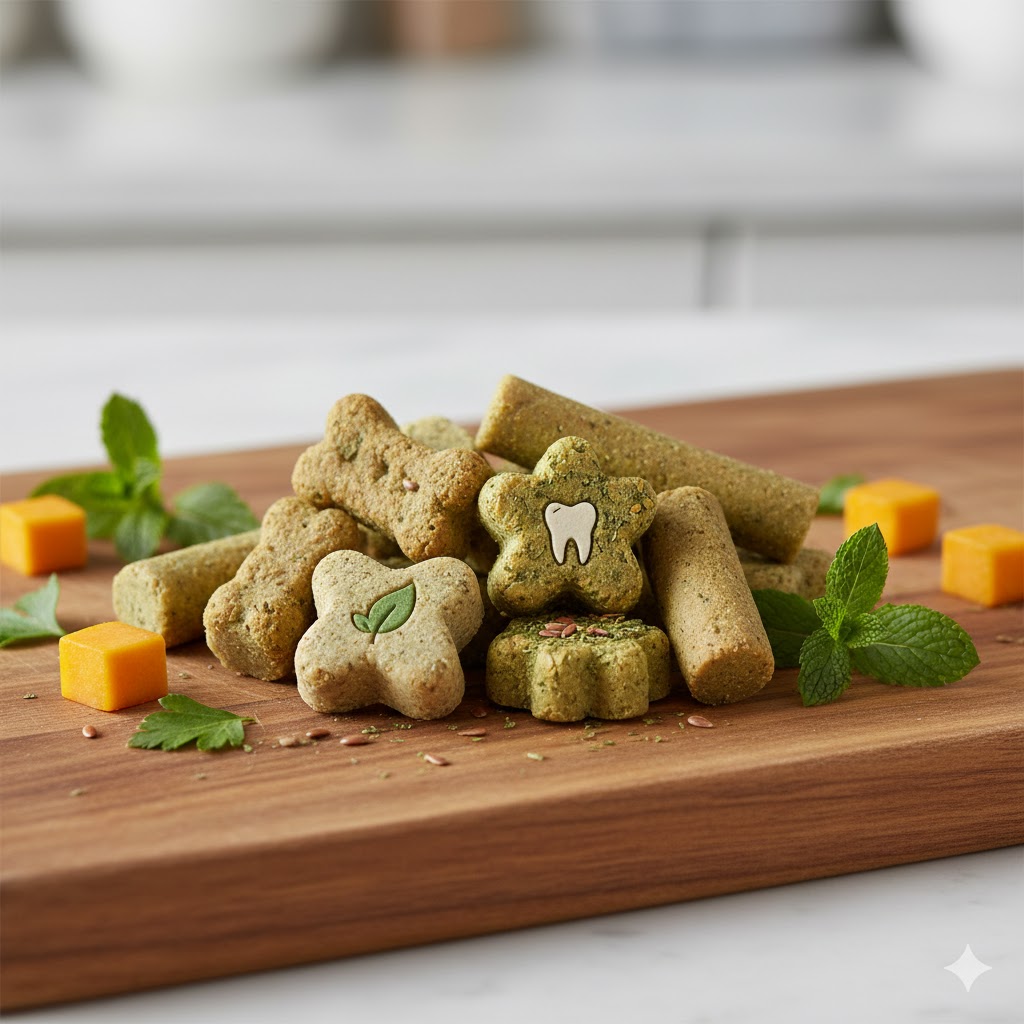
Key Ingredients for Digestive Health
For a dog treat to be truly “gut-friendly,” it needs more than just a “grain-free” label. It requires ingredients that nourish the intestinal lining.
1. Pumpkin and Sweet Potato
These are the gold standards of healthy dog treats. They are packed with soluble fiber, which adds bulk to the stool and helps regulate both diarrhea and constipation.
2. Probiotics, Prebiotics, and Postbiotics
- Prebiotics: (e.g., Chicory root, Inulin) These “feed” the good bacteria already in the gut.
- Probiotics: (e.g., Lactobacillus) Live beneficial bacteria added to the treat.
- Postbiotics: The newest trend in 2026; these are stable, heat-treated metabolites that provide the benefits of probiotics without the risk of the bacteria dying during the baking process.
3. Ginger and Turmeric
These anti-inflammatory powerhouses soothe the stomach lining. Ginger is particularly effective for dogs prone to car sickness or nausea.
4. Goat Milk
Often found in healthy dog treats as a powder or coating, goat milk is more easily digestible than cow’s milk and is a natural source of electrolytes and probiotics.
Comparison Table: Functional Ingredients at a Glance
| Ingredient | Primary Benefit | Goal |
| Pumpkin | Digestive | Regulates stool and provides fiber |
| Kelp (Seaweed) | Dental | Softens tartar via saliva |
| Sodium Hexametaphosphate | Dental | Prevents plaque from hardening |
| Ginger | Digestive | Soothes nausea and inflammation |
| Chicory Root | Digestive | Prebiotic fuel for gut bacteria |
| Parsley | Dental/Digestive | Freshens breath and aids pH balance |
2026 Trends in Healthy Dog Treats
As pet humanization reaches its peak, the treats you find while shopping Pet Supplies Online are becoming more sophisticated.
1. The “Texture Hybrid”
2.026 is the year of the multi-textured treat. Manufacturers are creating dog chew treats with a hard, abrasive outer shell (for dental scraping) and a soft, probiotic-filled center (for digestive support).
2. Upcycled Ingredients
Sustainability is a major driver. Many of the best dog treats now use “upcycled” ingredients; like salmon skins or misshapen vegetables; that are perfectly nutritious but would otherwise go to waste.
3. GLP-1 and Metabolic Support
Following the human health trend, “Metabolic Treats” are on the rise. These are low-calorie, high-fiber snacks designed to help dogs feel full longer, preventing the obesity that often complicates dental and digestive health.
4. Insect Protein Bases
Cricket and black soldier fly larvae are becoming standard in healthy dog treats. They are naturally hypoallergenic, making them the safest choice for dogs with severe digestive sensitivities.
Avoiding the “Bad” Stuff
When searching for dog treat options, be wary of “filler” ingredients that can counteract the benefits:
- Artificial Dyes (Red 40, Yellow 5): These provide no nutritional value and can cause allergic reactions.
- Excessive Glycerin: Used to keep treats “chewy,” but can lead to soft stools in sensitive dogs.
- Animal By-products: Look for specific meats like “Chicken” or “Beef” rather than generic “meat meal.”
Frequently Asked Questions (FAQs)
1. Can a dental treat replace brushing my dog’s teeth?
No. While dog chew treats are a fantastic supplement, they cannot reach every crevice like a toothbrush can. Think of treats as the “floss” and “mouthwash” of the canine world, they help, but the brush is still king.
2. How many healthy dog treats can I give per day?
The “10% Rule” still applies in 2026. Treats should never exceed 10% of your dog’s daily caloric intake. If you’re giving a large dental chew, you may need to reduce their dinner portion slightly.
3. Are grain-free treats better for digestion?
Only if your dog has a specific grain sensitivity. For most dogs, whole grains like oats or barley provide excellent fiber that actually helps digestion. “Grain-free” doesn’t automatically mean “healthy.”
4. Why does my dog get diarrhea after eating a new treat?
Even healthy dog treats can cause upset if introduced too quickly. The gut microbiome needs time to adjust to new proteins or high fiber levels. Start with half a treat to test their reaction.
5. What is the VOHC seal, and should I look for it?
The Veterinary Oral Health Council (VOHC) seal is awarded to products clinically proven to reduce plaque or tartar. When shopping for pet supplies online, this seal is a gold standard for dental efficacy.
Read More:- Cat Toys: Why Play Is Essential for a Happy, Healthy Feline

