


Toast packaging boxes, If you’ve ever had a delivery of toast, what was it like? Was it hot and fresh? Or cold and mushy, glued to the side of a paper bag?
If it was soggy, the packaging failed.
Toast is simple. Bread, heat, time. But it’s not simple to keep toast from going soggy once it leaves the kitchen. Steam builds up. The crust softens. The crunch disappears.
In 2026, the future of packaging will fix this issue. Sustainable materials. Convenience features. Sensory-driven design. So here’s what’s new, and how it can help your food company.
The Problem with Old Toast Packaging
Toast used to come in paper bags or cardboard boxes. Both had the same problem. They trapped steam.
If you put hot toast into a container, the steam rises. The steam hits the lid, cools down, and condenses into water. This water falls onto the bread. The crust becomes soft and chewy.
What old packaging got wrong:
- No ventilation to let steam escape
- Thin materials that squashed the toast
- No insulation to keep heat in
- Hard to open without tearing
- Not recyclable or compostable
Customers noticed. And they stopped eating at establishments that served soggy toast.
Trend 1: Sustainable Materials
In 2026, sustainable packaging is NOT optional. It is expected. Consumers want to feel confident in their purchase, including the packaging.
Environmentally-friendly choices for toast boxes:
- Kraft paperboard – look-at-me natural, brown, 100% recyclable
- Recycled chipboard – from post-consumer waste
- FSC paper – from sustainably harvested forests
- Compostable materials – commercial compostable
- Water-based coatings – no plastic lamination
Toaster boxes are often made with Kraft paper. It keeps the toast warm and allows it to breathe. Unlike plastic bags, which retain all the moisture, steam can escape through the kraft paper. The toast stays crispy longer.
Trend 2: Convenience Features
Consumers want packaging that’s convenient. Easy to open. Easy to close. Easy to carry.
Convenience features that matter:
Re-sealable openings – freshness after opening
Easy-tear openings – no scissors needed
Locking closures – no spillage in transit
Integrated handles – convenient to carry several boxes
Stackable designs – efficient packaging for delivery
Toaster boxes now have a small platform that elevates the toast from the bottom of the box. So the steam can escape from the bottom, top, and sides. This makes for crunchier toast.
Trend 3: Sensory-Driven Design
Texture and sound are important. A thin box that makes a lot of noise feels low quality. A solid box with a smooth finish feels upscale.
Sensory features that impress customers:
Soft-touch lamination – smooth surface for a touch of luxury
Magnetic closures – click when it closes
Ribbon pulls – easy to open, and a touch of luxury
No edges – no cuts on your fingers
Silent opening – no ripping and crunching
When a customer holds a beautifully designed toast box, they send this message to their brain: “This is quality food. This brand is trying to be the best.” That’s important, particularly when they are paying for delivery and tips.
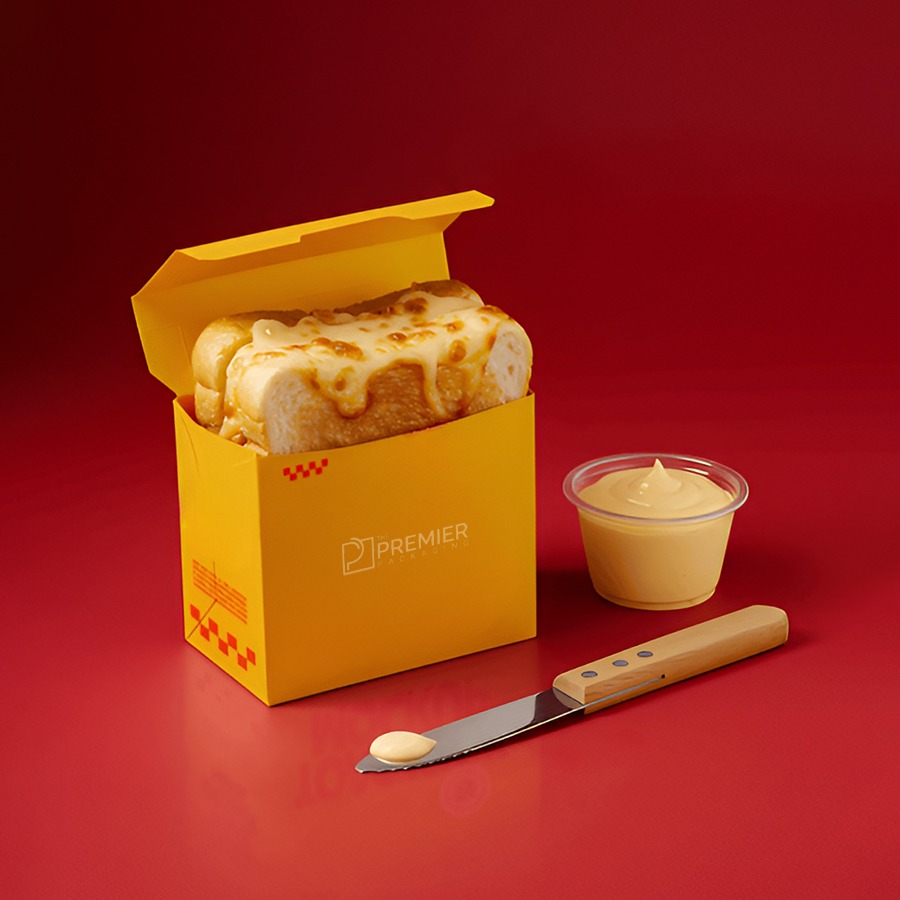
Trend 4: Transparent Windows
People like to see what they are eating. The window on the toast box allows them to do just that.
Window works on toast boxes:
Increases confidence – see what you get
Displays toppings and presentation
Increases satisfaction – no surprises
Generates hashtags – you want to share pretty food
In 2026, window cutouts are made from biodegradable PLA or cellulose instead of plastic. The window is transparent, strong, and biodegradable.
Trend 5: Ventilation Engineering
This is the key factor for toast packaging boxes. Without ventilation, the toast will be soggy.
How toast boxes are ventilated:
Vents or holes in the top or sides of the box
Placed to allow steam to escape but retain heat
Internally raised ribbons to keep toast from sticking
Paper gussets to make air pockets
Good toast boxes have several of these elements. Holes let steam out. Ridges lift the toast up. And you have warm, crunchy, freshly toasted toast.
Trend 6: Touchless Packaging
In 2026, QR codes appear on Toast boxes. Users use their mobile devices to open multimedia content.
What smart packaging can do:
- Provide instructions for reheating food
- Provide nutritional information
- Share the brand’s sustainability story
- Offer discounts on the next order
- Collect feedback and reviews
Smart packaging makes the toast box a product. Each box becomes a touchpoint with the consumer.
The Growing Toast Packaging Market
There’s a growing need for toast packaging. Restaurants, bakeries, and food delivery providers are shifting from paper bags to custom boxes. Sustainability, practicality, and sensory appeal are behind the shift.
If you’re a business looking to make the switch, there are custom toast boxes with all these features. Windows for air circulation. Kraft paper for sustainability. Windows for visibility. QR codes for marketing.
Final Thoughts
It’s a long way to the toaster. By 2026, the best packaging is sustainable, practical, and designed to appeal to the senses. They keep toast fresh and crisp, win customer loyalty, and elevate the simple act of delivery.
Your toast might be delicious. But the box is the first thing they see. Make it sustainable. Make it convenient. Make it sensory.

