


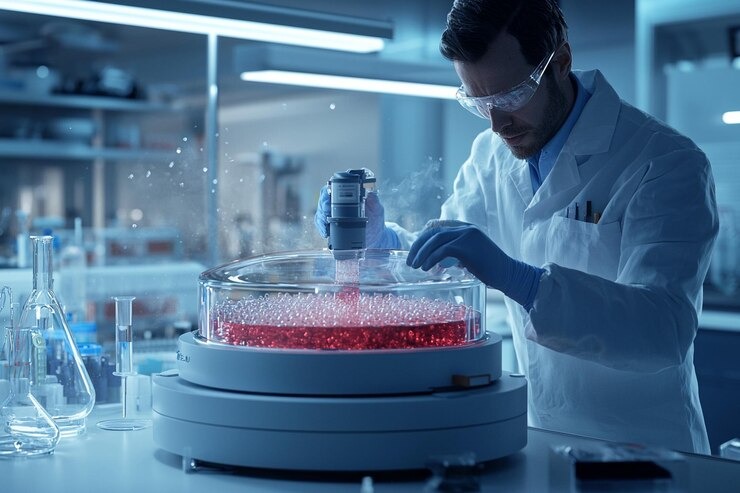
As demand for biologics, vaccines, therapeutic proteins, enzymes, and diagnostic reagents continues to grow, you need purification processes that can keep pace without compromising quality. Whether you work in pharmaceutical development, biotechnology, or academic research, producing highly purified proteins at commercial volumes requires more than simply increasing batch size. It demands reliable workflows, validated technologies, and scalable production strategies.
Large-scale purification enables you to move efficiently from laboratory research to commercial manufacturing while maintaining product consistency. By combining optimized expression systems, advanced chromatography, and rigorous quality control, you can supply high-quality proteins for applications worldwide.
Why Large-Scale Protein Purification Matters
When your research advances toward commercialization, protein demand increases dramatically. Small laboratory purification methods often cannot provide the yield, reproducibility, or efficiency required for industrial production.
A well-designed large scale protein purification services for biopharmaceutical manufacturing and commercial protein production workflow helps you:
- Produce consistent batches
- Increase protein recovery
- Reduce production costs
- Maintain biological activity
- Meet regulatory quality expectations
- Support global distribution
These advantages become increasingly important as biologics continue to replace traditional small-molecule drugs across multiple therapeutic areas.
Meeting Growing Worldwide Demand
Healthcare systems across the globe require larger quantities of recombinant proteins every year. These proteins support numerous applications, including:
- Monoclonal antibody production
- Vaccine development
- Cell and gene therapy research
- Diagnostic assay manufacturing
- Clinical research
- Industrial enzyme production
Without scalable purification strategies, manufacturers would struggle to supply enough material for clinical studies and commercial distribution.
By implementing optimized purification processes, you can increase production capacity while maintaining strict quality standards.
Maintaining High Purity at Industrial Scale
Scaling production should never reduce product quality. Every purification step must remove contaminants without damaging the target protein.
Modern purification platforms often combine multiple techniques such as:
- Affinity chromatography
- Ion exchange chromatography
- Size exclusion chromatography
- Hydrophobic interaction chromatography
- Ultrafiltration and diafiltration
Using complementary purification methods allows you to achieve exceptional purity while preserving protein functionality.
This balanced approach minimizes impurities, endotoxins, host cell proteins, and unwanted nucleic acids that could affect downstream applications.
Improving Manufacturing Efficiency
Efficient purification directly affects manufacturing timelines and operational costs.
Instead of relying on multiple manual procedures, automated purification systems help you:
- Shorten processing time
- Reduce operator variability
- Increase reproducibility
- Improve batch consistency
- Lower manufacturing expenses
Automation also allows production facilities to process multiple batches simultaneously while maintaining standardized operating procedures.
Supporting Regulatory Compliance
Protein therapeutics must satisfy strict international quality requirements before reaching patients.
Large-scale purification workflows include extensive quality control measures such as:
- Purity analysis
- Protein concentration testing
- Endotoxin detection
- Identity confirmation
- Functional activity assays
- Stability evaluation
Comprehensive analytical testing demonstrates that every production batch meets predefined quality specifications, helping support regulatory submissions across global markets.
Reducing Production Risks
As manufacturing volumes increase, small process variations can significantly impact product quality.
Optimized purification protocols reduce these risks by controlling critical parameters such as:
- Buffer composition
- Flow rate
- Temperature
- pH
- Column performance
- Protein loading capacity
Careful process validation allows you to produce reliable batches with predictable performance from pilot scale through commercial manufacturing.
Enabling Faster Development
Speed remains essential in modern biotechnology.
Scalable purification methods reduce delays between research, clinical development, and commercialization. Instead of redesigning purification processes after every production increase, scalable workflows maintain similar operating principles across different manufacturing volumes.
This consistency accelerates:
- Process development
- Technology transfer
- Clinical manufacturing
- Commercial launch
- Global product availability
Faster development ultimately helps patients gain access to new therapies sooner.
Supporting Multiple Protein Types
Every protein presents unique purification challenges. Differences in molecular weight, structure, stability, and expression system require customized purification strategies.
Large-scale purification platforms can accommodate numerous protein classes, including:
- Recombinant enzymes
- Growth factors
- Cytokines
- Antibodies
- Fusion proteins
- Vaccine antigens
- Diagnostic proteins
Customized workflows maximize recovery while protecting protein integrity throughout purification.
Choosing an Experienced Manufacturing Partner
Successful purification depends on technical expertise, process optimization, and scalable manufacturing infrastructure.
Working with Lytic Solutions, LLC for custom recombinant protein production and large-scale purification expertise gives you access to experienced scientists, proven purification platforms, and production capabilities designed to support projects from research through commercial manufacturing.
An experienced partner can also help optimize purification parameters, improve protein yield, and simplify technology transfer, reducing development risks throughout your project.
Future Trends in Protein Purification
Global protein demand will continue expanding as personalized medicine, cell therapy, and biologic drug development advance.
Emerging technologies are making purification more efficient through:
- Continuous chromatography
- High-capacity resins
- Automated process control
- Single-use manufacturing systems
- Advanced analytical monitoring
- Artificial intelligence-assisted process optimization
These innovations will allow manufacturers to produce larger quantities of high-quality proteins while improving efficiency and sustainability.
Conclusion
Large-scale protein purification plays a vital role in supplying the growing global demand for biologics, diagnostics, vaccines, and research reagents. By implementing scalable purification technologies, maintaining rigorous quality standards, and optimizing manufacturing efficiency, you can deliver consistent proteins for both research and commercial applications.
If your project requires dependable production capacity and customized purification expertise, contact us today for customized large scale protein purification solutions tailored to your research and manufacturing needs.
Frequently Asked Questions
What is large-scale protein purification?
Large-scale protein purification is the industrial process of isolating highly pure proteins from large production batches while maintaining biological activity, consistency, and quality for research or commercial applications.
Why is large-scale protein purification important?
It enables you to produce sufficient quantities of purified proteins for biologics, vaccines, diagnostics, and therapeutic development while ensuring reproducible quality and regulatory compliance.
Which industries benefit from large-scale protein purification?
Biotechnology, pharmaceutical manufacturing, vaccine production, diagnostics, industrial enzyme manufacturing, academic research, and contract research organizations all depend on scalable protein purification.
Which purification methods are commonly used at large scale?
Common methods include affinity chromatography, ion exchange chromatography, size exclusion chromatography, hydrophobic interaction chromatography, ultrafiltration, and diafiltration.
How does large-scale purification improve product quality?
Validated purification workflows remove contaminants, host cell proteins, endotoxins, and impurities while preserving protein structure, activity, and batch-to-batch consistency.
Can purification processes be customized for different proteins?
Yes. Purification strategies are tailored according to protein size, stability, expression host, molecular properties, intended application, and production volume to maximize yield and purity.
What challenges arise during protein scale-up?
Common challenges include maintaining protein stability, preventing aggregation, optimizing chromatography performance, increasing recovery, reducing impurities, and ensuring consistent process reproducibility.
How do you choose a large-scale protein purification provider?
Look for expertise in recombinant protein production, scalable purification technologies, validated quality systems, regulatory support, customized process development, and proven commercial manufacturing experience.

