


When a commercial building starts to look a bit worn out, replacement can feel like the obvious answer. Old finishes, faded colours, weathered frames, and dated shop fronts can make a property look less attractive, and they may change how customers see the business too. Still, full replacement is not always the right move, even if it seems tempting.
In many cases, curtain wall refurbishment can be a workable way to restore and modernise an existing facade without the same level of disruption and cost that comes with removing everything and starting again. If it’s paired with things like shopfront cladding, on-site sprayingservices, and shopfront spraying, refurbishment can give commercial properties that refreshed look while keeping much of what’s already there.
Why is curtain wall refurbishment becoming a popular alternative?
Curtain walls are a key part of how a commercial building looks. Over time, though, being hit by sunlight, rain, pollution, and changing weather can leave frames and panels looking tired. At that point, replacing the whole system can turn into a big project with serious planning, labour, materials, and downtime.
Refurbishment, instead, takes a more thoughtful route. Rather than automatically tearing off the existing facade, specialists can check what condition it’s in, then decide which components can be cleaned, repaired, refinished, or even subtly redesigned.
This can be especially useful when the main structure is still in good shape, but the appearance has become outdated, and the building just doesn’t feel current anymore.
How can refurbishment transform an existing commercial facade?
Refurbishment can really end up doing more than just “making it look better”. Like, it sounds simple, but it can also shift the whole vibe of a commercial facade almost immediately. A proper refurbishment isn’t only about cleaner surfaces; it can change how the property reads from the street, and that visual personality thing matters a lot.
For instance, existing aluminium frames, panels, and other compatible surfaces can often be readied and then refinished, usually with a fresh colour or a new finish. So instead of going all the way to full structural replacement, property owners can steer things towards a more contemporary appearance with less disruption than you might expect.
And yeah, professional on-site spraying services help here, because big or fixed elements don’t always need removal. If the components are prepared correctly and the masking and application are done with care, you can reach a consistent, tidy finish while the work happens in place. It’s one of those approaches that tends to look right, not patchy or uneven.
Also for businesses, especially those still operating, minimising unnecessary disruption can be as important as the final look. Keeping access open, reducing downtime, and working efficiently can make the upgrade much easier to manage.
Could shop front cladding complement curtain wall refurbishment?
Yes, pretty much. The shopfront is usually the first bit customers actually see, so if the entrance is stuck in a dated state, it can drag down an otherwise modern building.
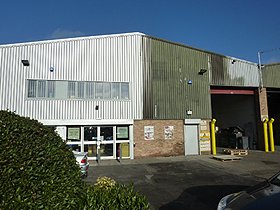
Shopfront cladding gives you a practical route to add new colours, textures, and extra visual cues to the frontage. It can strengthen the connection between the building exterior and the company’s branding, not just match it randomly. In a good refurbishment plan, you could pair a curtain wall refurbishment with contemporary cladding around the entrance, columns, or the main retail frontage. Rather than treating each area like separate projects, the whole exterior can end up working as one more unified visual identity.
That’s especially handy for retail units, restaurants, offices, showrooms, and other places where customers are coming to see you, because appearance plays a key role there, for real.
How does shop front spraying create a faster visual transformation?
Not every tired shop front needs to be pulled out and replaced. In certain situations, shop front spraying can be the more efficient route to a fresher, cleaner look with less fuss.
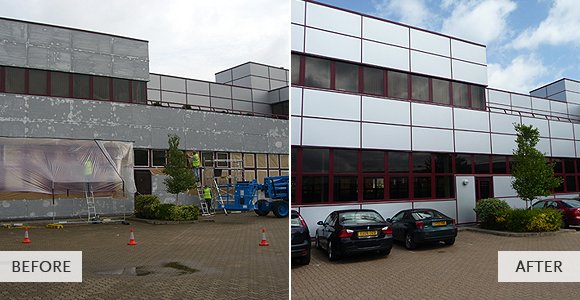
Because spraying lets you refinish suitable existing surfaces into a new colour, businesses can modernise the outside without discarding what’s already there. It’s especially handy when the structure and the material are still perfectly fine, but the colour, or the overall finish, just doesn’t fit the design you want anymore.
A renewed finish can also help bring older commercial units in line with current branding. If a business is changing its palette, for example, it may update the frontage without fully replacing components that are still doing their job properly.
The real point is the preparation, not the spray alone. Cleaning, degreasing, fixing imperfections, choosing compatible coatings, and then applying the finish in the right way all add up to the outcome people actually see.
Is refurbishment more sustainable than complete replacement?
One of the strongest reasons people choose refurbishment is that it can make better use of materials that are already in place.
Complete replacement basically means stripping out existing parts and putting brand new materials back in. But if an existing facade still holds up structurally, refurbishing it can limit how much material needs removing, and that reduction matters.
Still, refurbishment isn’t always the correct answer. You have to assess safety, the structural condition, how the materials work together, thermal performance, and what the long-term needs are before deciding whether refurbishment or replacement is the better move.
That said, when existing elements can genuinely be reused, giving them a new lease on life can be a smart part of a more resource-conscious approach to property upkeep.
Can refurbishment help businesses protect their brand image?
Yes, refurbishment can absolutely help businesses protect their brand image, as it really does. A building tends to act as this extra part of the company’s identity, and customers are often judging you before they even walk in. They see the exterior first – just the look of it and the overall condition – so it’s not really optional.
If the facade looks tired, faded, or inconsistent, people can assume the business is neglected. But if the frontage is clean, updated, and more modern, that first impression tends to feel stronger and more trustworthy.
This is where doing curtain wall refurbishment along with shop front cladding and proper professional spraying techniques can be genuinely helpful. Instead of paying for a whole new facade, businesses can concentrate on the specific bits that have the biggest visual effect.
Then there’s colour. The right finish can make a building feel more current and coordinated; it can reinforce corporate branding or even help different sections of a development feel visually linked. That sort of unity matters more than people think.
What should businesses consider before choosing refurbishment?
The safest start is always a professional assessment of what’s already there. Not every surface can be refinished properly. Sometimes issues are hidden—structural or material—so replacement might be the better call rather than trying to overlay it.
Property owners should think about things like:
● The structural state of the existing curtain wall and shop front
● The materials involved, and whether they’ll work well with the proposed coatings
● The colour outcome and the finish you actually want
● How much preparation is required
● Access, plus the real working conditions on site
● How much disruption to expect for customers, staff, and nearby businesses
● What long-term maintenance might be needed
A good curtain wall refurbishment specialist should be able to lay out what’s realistic. They should also clarify whether spraying, cladding, repairs, or full replacement is the most suitable solution for the situation.
Conclusion
A tired commercial facade does not always need to be tossed out from the very start. While still giving it a more modern, professional appearance, curtain wall refurbishment can actually be a practical way to restore an existing building.
For retail and commercial places, shop front cladding can add a fresh visual identity, and it can help shift an outdated frontage into something that looks more current.
With proper on-site spraying services, suitable existing surfaces can be refinished efficiently while maybe cutting down the disruption that usually comes with full replacement.
Likewise, shop front spraying can bring a dated entrance back to life, giving it a completely new look and helping a business create a stronger first impression without jumping straight into “from scratch”.
In the end, refurbishment is really about noticing the promise in what is already there and turning an ageing exterior into something that feels worth looking at again.
Frequently Asked Questions
What is curtain wall refurbishment?
Curtain wall refurbishment is basically about getting an existing curtain wall system back into shape, instead of just replacing the whole facade automatically. Depending on how it’s been doing, it can mean cleaning, repairs, repainting, spraying, or swapping out only selected components.
Is shop front spraying suitable for every shop front?
Not always. It depends on the existing material, how sound the surface is, coating compatibility, and what finish you want. There’s also the design elements side of it. It can help create a more consistent visual identity between the shop front and the wider surroundings, but a wider professional assessment should be carried out before shop front spraying gets started.
What are on-site spraying services?
On-site spraying services mean applying coatings professionally to suitable fixed surfaces at the property, rather than removing components and transporting them somewhere else. This can be especially useful for larger architectural features and commercial facades.
How does shop front cladding improve a building?
Shop front cladding can refresh the look of a dated frontage by adding new finishes, colours, and design bits. It can also help maintain a more consistent visual identity between the shop front and the wider commercial building.

