


Windows and doors play a much bigger role in our lives than they are often given credit for. They influence how much sunlight enters your bedroom, how easily fresh air circulates throughout your home, as well as how much outside dust and noise reaches indoors. A poorly selected window may allow excessive heat to build up and restrict ventilation. Similarly, an unsuitable door design can occupy valuable floor space, interrupt movement, and create unnecessary inconvenience. To avoid such issues, an increasing number of homeowners today are installing uPVC windows and doors.
Benefits of uPVC Windows and Doors
uPVC doors and windows are particularly renowned for their durability, attractive appearance, and relatively low maintenance requirements. They are well-suited to both newly constructed homes and renovation projects. uPVC door and window frames offer a practical combination of contemporary design and everyday functionality, and are available in a plethora of styles. Depending on your specific needs and preferences, you can choose stylish casement windows or even opt for space saving sliding door design. While a spacious living room pairs best with large glass panels for natural light, bedrooms typically demand a focus on privacy and airflow control. Learning about the different frame designs available helps narrow down the right options for your floor plan.
Popular Types of uPVC Windows for Indian Homes
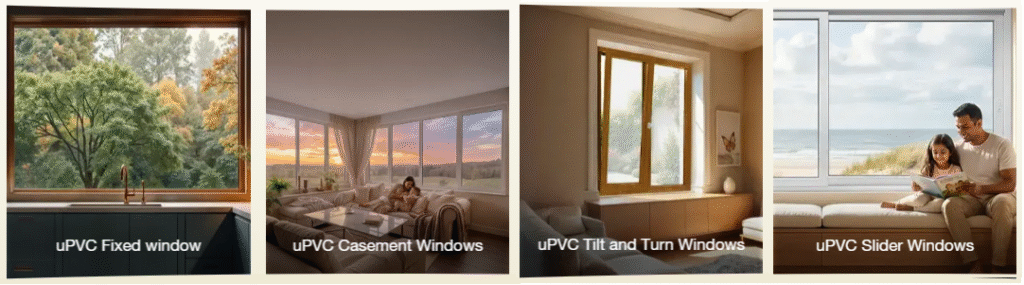
- Casement uPVC Windows: Casement windows are attached to the frame using hinges and can open either inward or outward, depending on the design and available space. When opened, these windows allow plenty of fresh air to enter the room. Additionally, when properly closed, casement windows can provide effective sealing against dust and rain.
- Sliding uPVC Windows: These windows operate horizontally along tracks, rather than swinging outward or inward. They are a practical option for homes where space is limited. Sliding windows are generally easy to operate, and help maintain a clean and uncluttered appearance within the home.
- Tilt and Turn uPVC Windows: Tilt and turn windows feature two different opening options. They can tilt inward slightly from the top to allow controlled airflow, or may open more fully like a casement window when maximum ventilation or access is required. This versatility makes them a useful option for modern apartments and high-rise residences.
- Fixed uPVC Windows: Such windows are designed to remain permanently closed. Rather than providing ventilation, their primary purpose is to maximise natural light and offer uninterrupted views of the outdoors.
Popular uPVC Door Designs for Indian Homes
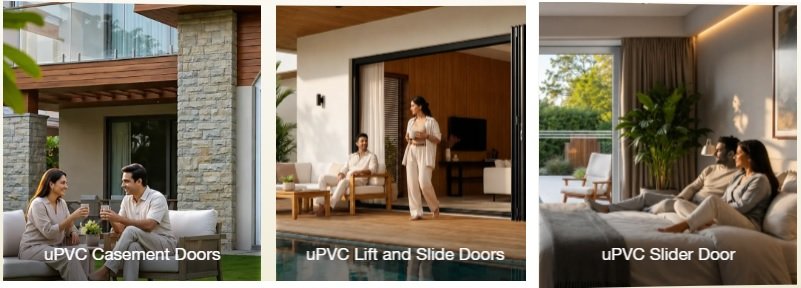
- Sliding uPVC Doors: Sliding door designs are ideal for balconies, patios, and areas where homeowners want easy access without sacrificing indoor floor space. The door panels move horizontally along tracks, thereby eliminating the need for a swinging door.
- Casement uPVC Doors: When it comes to uPVC doors for bathrooms, casement door design is a popular choice. They open inward or outward, much like conventional hinged doors. Their design can provide effective sealing against dust, rain, and outside air.
- Lift and Slide uPVC Doors: Lift and slide doors are designed for larger openings. The mechanism slightly lifts the panel before it moves along the track, thereby ensuring smooth operation. These doors are particularly suitable for villas, large living rooms, and homes with expansive balconies.
The right door and window design would depend largely on how each part of your home is used. Before making a final decision, you must consider the available space, ventilation requirements, sunlight, privacy, cleaning needs, and the overall design of the property. The right combination of uPVC windows and doors can improve not only the appearance of your home but also its everyday comfort and functionality.

