


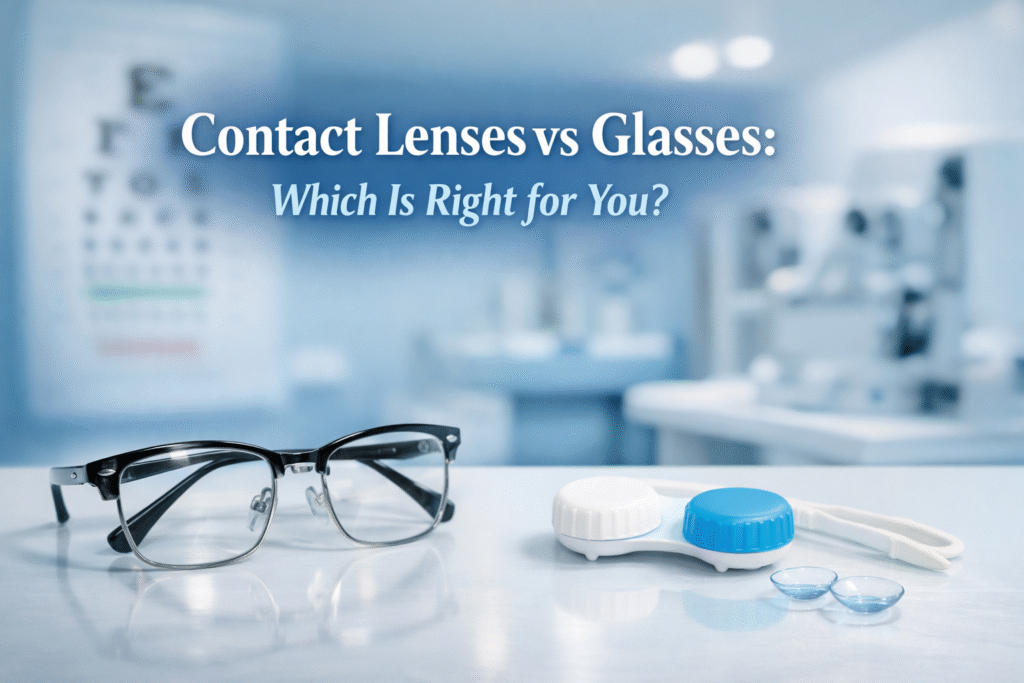
When it comes to improving your eyesight, many people struggle with the decision of contact lenses vs glasses. With so many modern vision correction options available today, it is important to understand which solution fits your comfort, daily routine, and long term needs. Your lifestyle, budget, and eye health all play a role in determining the best eyewear for lifestyle balance.
In this guide, we will explore the advantages, disadvantages, and key differences to help you feel confident when choosing eye correction method that suits you best.
Understanding the Basics of Contact Lenses vs Glasses
Before comparing the two, it helps to understand how each option works and who they are designed for.
What Are Contact Lenses?
Contact lenses are thin lenses placed directly on the surface of the eye to correct vision problems such as nearsightedness, farsightedness, and astigmatism. They are one of the most popular eyeglass alternatives for people who want clear vision without wearing frames.
Common types include:
- Daily disposable lenses
- Bi weekly or monthly lenses
- Toric lenses for astigmatism
- Multifocal lenses for age related vision changes
Because they sit directly on the eye, contact lenses provide a natural field of vision without frame obstruction.
What Are Glasses?
Glasses are frames fitted with prescription lenses that sit in front of the eyes. They remain one of the most widely used vision correction options due to their convenience and low maintenance.
Glasses can include:
- Single vision lenses
- Bifocal lenses
- Progressive lenses
- Blue light filtering lenses
In addition to correcting vision, glasses can enhance personal style and serve as a fashion accessory.
Pros and Cons of Contact Lenses vs Glasses
Understanding the strengths and weaknesses of each option makes it easier when choosing eye correction method.
Advantages of Contact Lenses
Contact lenses offer several benefits:
- Provide a full field of vision
- Do not fog up in cold weather
- Stay secure during sports and exercise
- Do not alter your appearance
- Work well with sunglasses
For individuals seeking discreet eyeglass alternatives, contact lenses are often a practical choice.
Disadvantages of Contact Lenses
Despite their convenience, contact lenses require commitment:
- Daily cleaning and hygiene
- Potential dryness or irritation
- Ongoing replacement costs
- Higher risk of infection if not maintained properly
They demand responsibility and proper care to ensure healthy eyes.
Advantages of Glasses
Glasses offer simplicity and safety:
- Easy to put on and remove
- Minimal daily maintenance
- Lower risk of eye infections
- Can be cost effective long term
- Protect eyes from dust and wind
Many people prefer glasses because they are reliable and one of the safest vision correction options available.
Disadvantages of Glasses
There are also limitations to consider:
- Can fog up in humid or cold weather
- May slip during physical activities
- Limited peripheral vision compared to contacts
- Frames may feel heavy after extended wear
These factors can influence the contact lenses vs glasses decision.
Lifestyle Considerations
Your daily routine is one of the biggest factors in selecting the best eyewear for lifestyle comfort.
Active Individuals
If you play sports or exercise frequently, contact lenses often provide greater freedom of movement. They stay in place and do not break easily during activity.
Office and Screen Users
For people who spend long hours on computers, glasses with blue light filtering prescription lenses may reduce digital eye strain and provide added comfort.
Travel and Convenience
Glasses are easy to maintain while traveling since they require no cleaning solutions. However, contact lenses may be more practical for outdoor activities where glasses could fog up or slide down.
Children and Teens
Glasses are typically recommended for younger children because they are easy to manage. Responsible teenagers may successfully use contact lenses under professional supervision.
Eye Health Factors
Beyond convenience and appearance, eye health plays a crucial role in choosing eye correction method.
Dry Eye Concerns
Individuals with dry eyes may find glasses more comfortable since contact lenses can sometimes increase dryness.
Allergies
Seasonal allergies may cause irritation when wearing contacts. Glasses can provide a protective barrier against airborne allergens.
Importance of Eye Exams
Regardless of your choice in the contact lenses vs glasses debate, regular eye exams are essential. An eye care professional can determine which vision correction options are safest and most effective for your eyes.
Cost Comparison
Budget considerations are another important factor.
Initial Investment
Glasses require purchasing frames and prescription lenses, but they can last for years with proper care. Contact lenses may involve fitting fees and the purchase of starter supplies.
Long Term Expenses
Contact lenses require ongoing replacement and cleaning products, which increase long term costs. Glasses may only need updates when your prescription changes.
Evaluating both short and long term expenses helps you make a practical decision.
Using Both Options
Many people choose not to limit themselves to one solution.
A Flexible Approach
Wearing contact lenses during work or social events and glasses at home allows your eyes to rest while maintaining convenience.
Benefits of Combining Both
- Backup vision solution
- Comfort variation
- Adaptability for different environments
- Personal style flexibility
For some individuals, this balanced approach becomes the best eyewear for lifestyle versatility.
Professional Guidance
If you are unsure about contact lenses vs glasses, professional advice can make the decision easier. At Smart Opticals, patients receive personalized recommendations based on prescription strength, daily habits, and overall eye health. Exploring different vision correction options with expert guidance ensures you select the safest and most comfortable solution.
Final Thoughts
There is no single answer in the contact lenses vs glasses discussion. The right choice depends on your lifestyle, comfort preferences, and eye health needs. Contact lenses provide freedom and natural vision, while glasses offer simplicity and low maintenance.
The most effective step in choosing eye correction method is scheduling a comprehensive eye exam. With proper guidance and a clear understanding of your needs, you can confidently select the solution that keeps your vision sharp and your eyes healthy.

