


Introduction
Modern software systems rely heavily on Machine Learning Course. It powers search engines, fraud detection tools, medical diagnosis platforms, and recommendation systems. Behind every successful model lies a clear and disciplined process. Many people focus only on algorithms. That view is incomplete. Real machine learning work involves data engineering, experimentation, validation, and deployment. Each stage shapes the final performance. Technical precision is vital in every stage of modern-day ML. A Machine Learning Online Course follows every industry-relevant trend to offer the best guidance to learners. This article explains the most important processes involved in modern-day machine learning. Read on to know more.
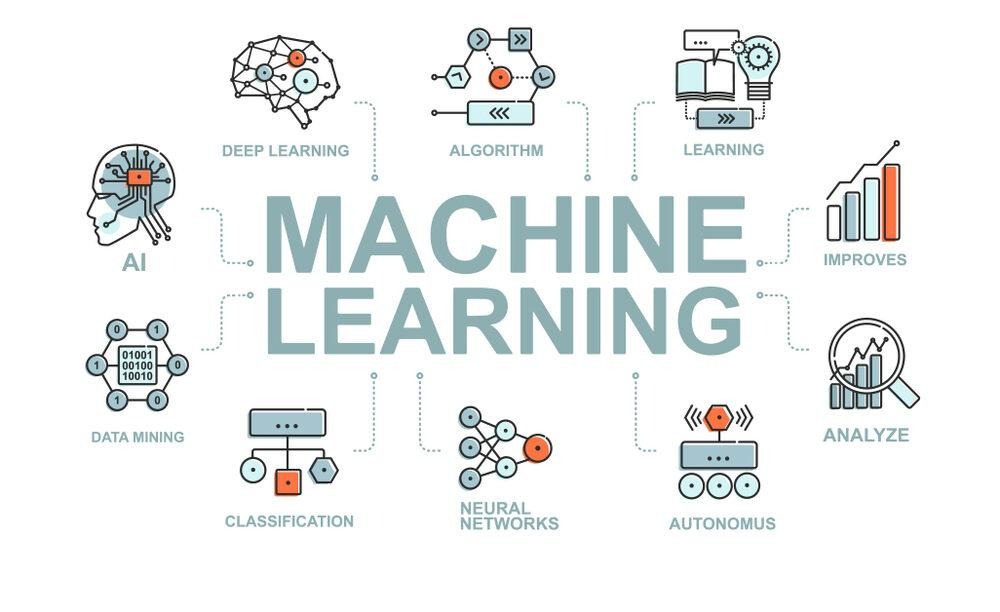
Machine Learning Processes
Here are the major processes involved in Machine Learning Course.
Problem Definition
Every project starts with a well-defined problem. Teams identify the business goal. They convert that goal into a machine learning task. The task may involve:
- Classification
- Regression
- Clustering
- Sequence prediction
Engineers define input variables. They define the expected output. They also define performance metrics. Accuracy, precision, recall, F1 score, and mean squared error are common metrics. A clear metric prevents confusion later. A poorly defined problem leads to wasted effort. A precise problem statement saves time and compute power.
Data Collection and Data Engineering
Data is the core of machine learning. Every ML model learns patterns from data. Teams collect structured data from databases. They collect unstructured data from logs, sensors, images, or text streams.
Data engineers build pipelines. These pipelines
- Extract, transform, and load data.
- Handle missing values.
- Remove duplicates.
- Standardize formats.
- Ensure data consistency across systems.
Clean data improves signal strength. Noisy data reduces model accuracy.
Data Preprocessing and Feature Engineering
Raw data rarely works in its original form. Engineers preprocess the dataset. They normalize numerical features. They encode categorical variables. They handle outliers.
Feature engineering plays a critical role. Engineers create new variables from existing data. They generate interaction features. They apply transformations such as logarithmic scaling. They reduce dimensionality using techniques like principal component analysis. Better features improve learning speed. Better features increase model accuracy.
- Model Selection and Training
Engineers select an appropriate algorithm. They choose linear regression for simple regression tasks. Random forests are useful for structured data. Neural networks work well with image or speech tasks.
Once the algorithm is selected, training begins. The model uses labelled data for learning. GPUs accelerate deep learning tasks. Workloads become easier to scale on cloud platforms. The Machine Learning Certification Course offers state-of-the-art training facilities for learners.
Model Evaluation and Validation
Evaluation is a necessary step in ML. it ensures that the ML models perform accurately even on unseen data. Teams divide data into:
- Training Sets
- Testing Sets
They may use cross-validation for stability. Overfitting is a common risk. The model may memorize training data. Regularization techniques reduce this risk. Early stopping also prevents performance degradation. Evaluation metrics guide decisions. A model must meet predefined thresholds before deployment.
Deployment and Monitoring
A trained model gains value after it serves real users. Engineers deploy models using APIs or microservices. They integrate models into production systems. Monitoring follows deployment. Data drift can reduce performance. Input distributions may change over time. Teams track prediction accuracy. They retrain models when performance declines. Continuous integration and continuous delivery pipelines support automation.
Conclusion
Modern machine learning goes beyond algorithm. Defining problems, data handling, and feature design are vital ML procedures. Professionals train, validate, and monitoring data. A Machine Learning Course in Delhi offers classroom training, hands-on projects, and direct interaction with industry experts. Each process in ML connects to the next. Weakness in one stage harms the entire system. Strong engineering discipline ensures reliable outcomes. Organizations that respect these processes build scalable and trustworthy machine learning systems.

