


For most of the last century, choosing an engagement ring meant choosing a diamond. Shape, carat, and clarity but rarely did the conversation stray past those three letters. But, these days, a growing number of couples are opting for a blue sapphire engagement ring as their first choice rather than their alternative one, and the reasons behind that shift say as much about modern relationships as they do about fashion.
A Colour with a Backstory
Blue sapphire has never really needed an introduction. It has sat on the hands of queens, been mined from mountain rivers for over two thousand years, and carried associations with loyalty, wisdom, and sincerity long before “engagement ring” was even a phrase. What’s changed is who’s choosing it and why.
The Royal Effect, Revisited
It’s difficult to talk about sapphire’s modern popularity without acknowledging the ring that relaunched it into the mainstream. When a certain royal engagement ring passed from one generation to the next, search interest in sapphire jewellery spiked and never fully came back down. But the current wave of interest isn’t just nostalgia for a royal love story but a broader rejection of the idea that there’s only one “correct” gemstone for a proposal. Couples treat colour like venue or music choices: as a reflection of personality, not as an obligation to tradition.
Durability Nobody Talks About Enough
There’s a practical argument hiding underneath the romantic one. Sapphire sits at 9 on the Mohs hardness scale, which makes it genuinely suitable for daily wear, not just special occasions. That durability matters as much as the colour does for anyone whose hands are rarely out of water, soil, or a gym bag. A well-cut gemstone engagement ring in sapphire can realistically be worn every day for decades without losing its shine, which is a big part of why jewellers increasingly position it as a serious, long-term alternative rather than a novelty.
From Single Ring to Ring Wardrobe
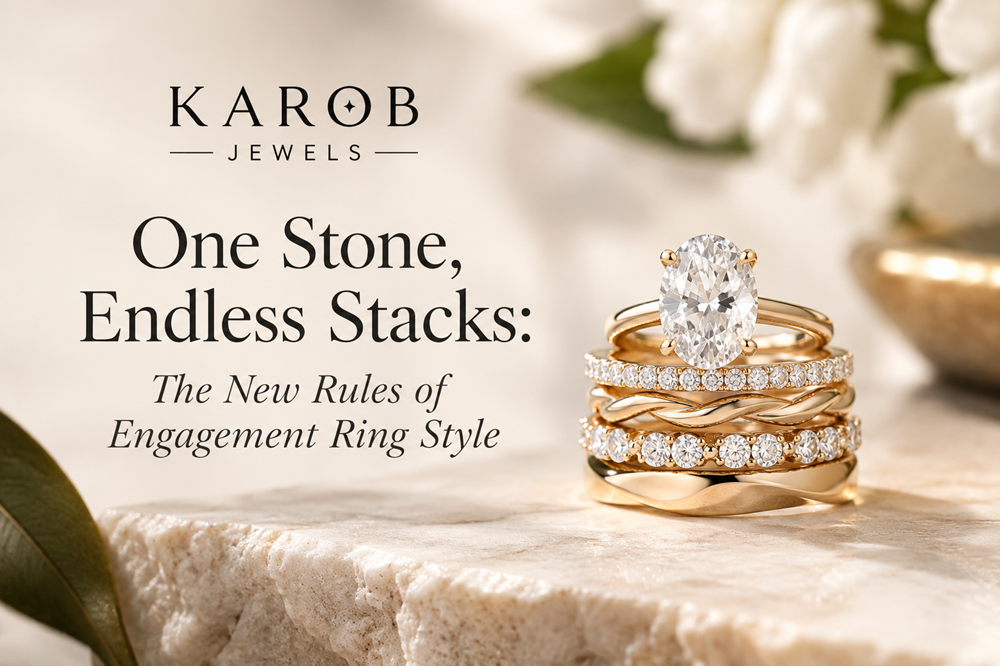
The second major shift is less about colour and more about quantity. Engagement rings used to be a one-and-done purchase. Increasingly, they’re the opening piece in a small, evolving collection.
Why Stacking Changed the Rules
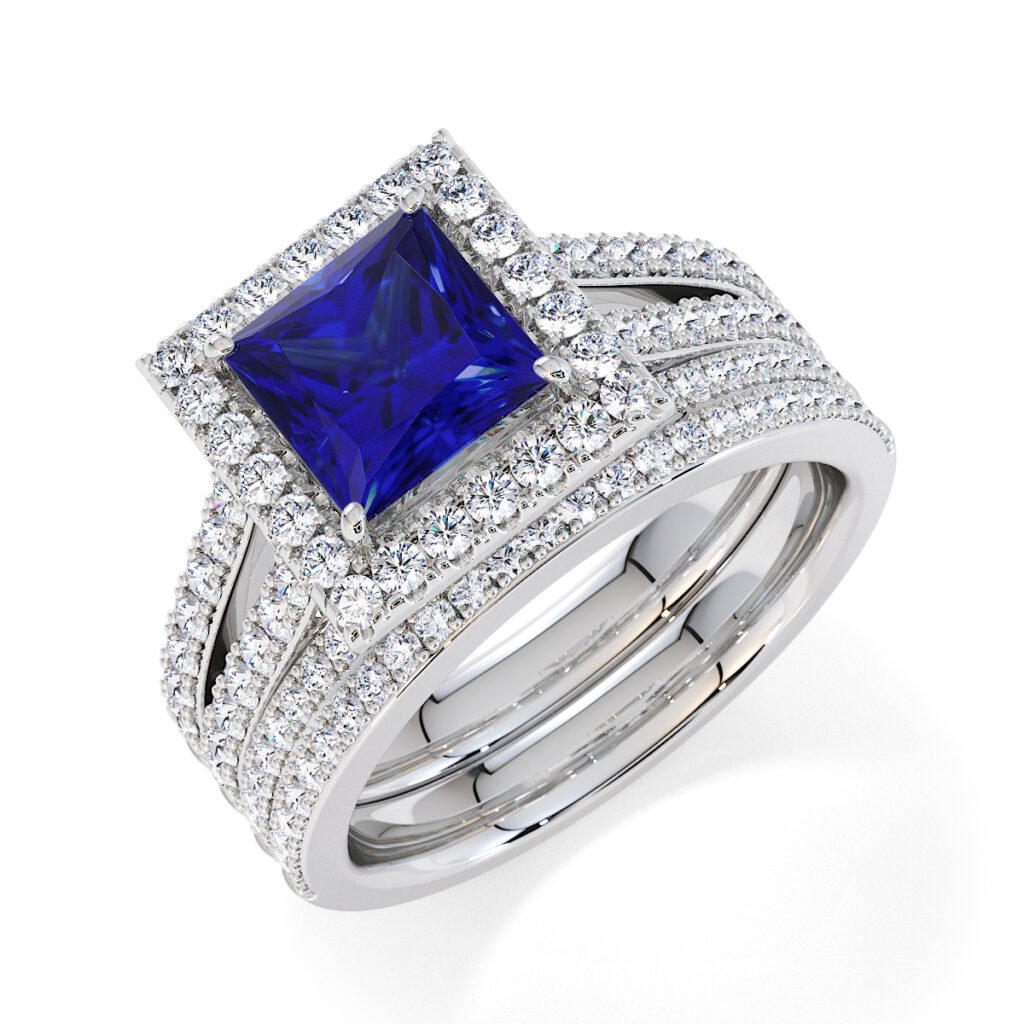
Social media gets a lot of credit (or blame) for the trend, but the underlying logic is simple: a single ring tells one story, while a stack tells several. A sapphire centrepiece paired with a slim diamond band reads differently on a wedding day than it does five years and two anniversaries later, once another band has joined it. This trend is where diamond eternity rings have found a second life, not as a replacement for the engagement ring, but as a companion to it. Worn alongside a coloured centre stone, a line of continuous diamonds adds brightness and contrast without competing for attention.
Half, Full, and Everything In Between
Not every eternity band is required to encircle the entire finger. Half-eternity styles, where stones run across the top half of the band only, sit flatter and more comfortably against an engagement ring, making them a practical choice for everyday stacking. Full eternity styles, by contrast, are often chosen as standalone anniversary or push-present pieces, since the continuous line of stones carries meaning on its own. Either way, diamond eternity rings have become less about marking an occasion and more about building a look over time.
Choosing Blue, Choosing Craft
Not all blue sapphire pieces are created equal, and the market is where buyers are becoming noticeably more informed.
What Separates a Good Stone from a Great One
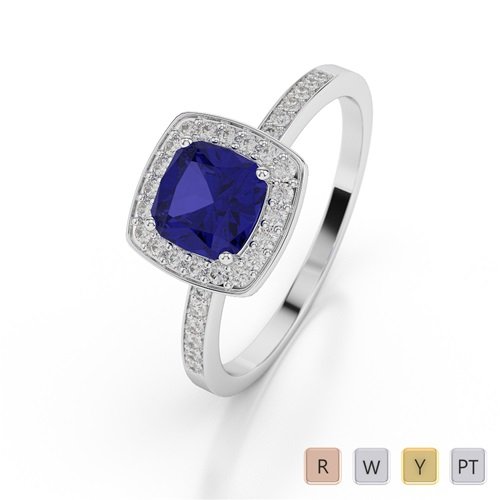
Cut, clarity, and that specific cornflower-blue saturation jewellers chase are what separate an average stone from a showstopping one. Round and oval cuts tend to maximise brilliance, while cushion and emerald cuts lean into the stone’s depth of colour rather than its sparkle. Setting matters just as much as the stone itself, wherein white gold and platinum intensify the coolness of the blue, while yellow and rose gold settings create a warmer, more vintage-leaning contrast. This is part of why blue sapphire Rings are rarely interchangeable from one jeweller to the next; small differences in cut and setting change the entire character of the piece.
Natural, Lab-Grown, or Both?
The sustainability conversation has reached gemstones the same way it reached diamonds a decade ago. Lab-grown sapphire offers the identical chemical composition and hardness of a mined stone, at a lower price point and with a far more traceable origin story, which is an increasingly important factor for buyers who want transparency, not just beauty. Natural sapphire, meanwhile, retains a rarity premium that some buyers still value for sentimental or investment reasons. Neither choice is “more real” than the other; they’re simply different trade-offs between provenance and price.
Summing Up
To sum up, what ties all of these trends together is a simple cultural pivot: engagement jewellery is increasingly being chosen the way people choose the rest of their personal style both deliberately, individually, and with an eye toward longevity rather than convention. Gemstone engagement rings are no longer positioned as the “alternative” option tucked at the back of a catalogue; they’re a primary category in their own right, with their own loyal following.
That same logic extends to how people build their jewellery collections over time. A striking centre stone, a line of diamond eternity rings to frame it, and a willingness to mix metals and cuts rather than match everything perfectly and that’s what the modern bridal look increasingly resembles. It’s less about a single perfect ring and more about a collection that grows the way a relationship does.
For anyone currently weighing a blue sapphire engagement ring against a more traditional choice, the honest answer is that there isn’t a wrong one anymore. The only real question is which story you want your hands to tell.

