



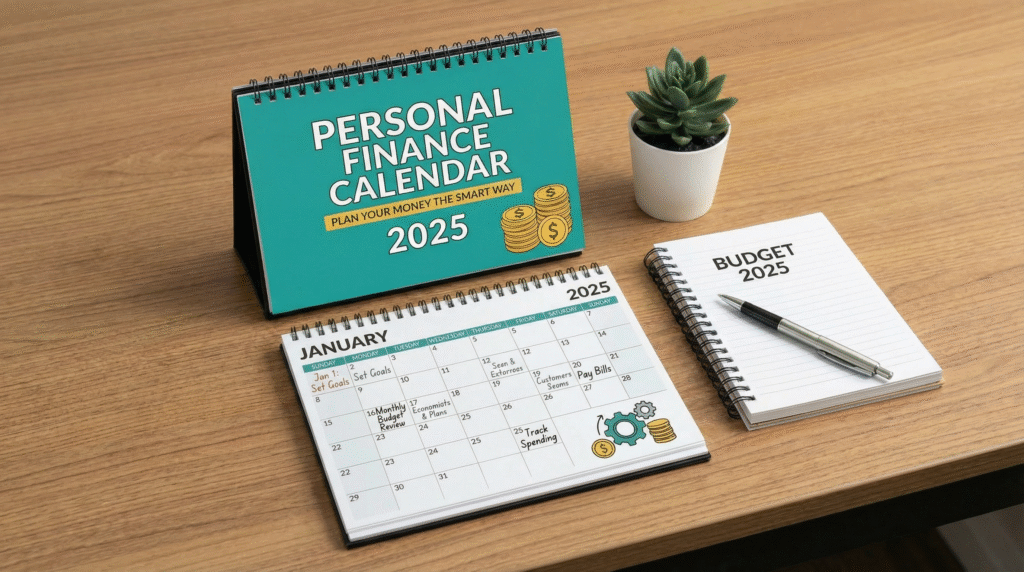
Managing your money doesn’t have to be stressful or confusing. With the right system in place, you can stay organized, avoid financial mistakes, and reach your goals faster. That’s where a Personal Finance Calendar comes in.
Instead of reacting to bills, expenses, and savings at the last minute, a personal finance calendar helps you stay one step ahead. It gives you a clear monthly and yearly plan so you always know what’s coming next.
What Is a Personal Finance Calendar?
A Personal Finance Calendar is a simple schedule that tracks your financial activities throughout the year. It includes things like:
- Bill payment dates
- Savings goals
- Budget reviews
- Investment planning
- Tax deadlines
By organizing these tasks in advance, you reduce stress and gain better control over your money.
Why You Need a Personal Finance Calendar
Without a plan, it’s easy to miss payments, overspend, or forget important financial tasks. A structured calendar helps you:
- Stay consistent with budgeting
- Avoid late fees and penalties
- Build better saving habits
- Plan for big expenses in advance
- Reduce financial anxiety
In short, it turns money management into a simple routine instead of a burden.
How to Create Your Personal Finance Calendar
Creating your own calendar is easier than you think. Follow these simple steps:
1. Track Your Income and Expenses
Start by listing all your income sources and monthly expenses. This gives you a clear picture of your financial situation.
2. Mark Important Dates
Add key financial dates such as:
- Rent or mortgage payments
- Utility bills
- Loan payments
- Subscription renewals
This ensures you never miss a deadline.
3. Set Monthly Financial Goals
Each month, define clear goals like:
- Saving a fixed amount
- Paying off debt
- Reducing unnecessary spending
These small goals add up over time.
4. Schedule Budget Review
Set a weekly or monthly time to review your spending. This helps you stay on track and adjust when needed.
5. Plan for Big Expenses
Use your calendar to prepare for upcoming costs like:
- Travel
- Festivals or events
- Annual fees
- Emergency funds
Planning ahead prevents financial surprises.
Using a Personal Finance Calendar as a Couple
Money management becomes more important when you’re in a relationship or married. A Personal Finance Calendar can help couples stay aligned and avoid conflicts.
Communicate Openly
Discuss income, expenses, and financial goals regularly. Transparency builds trust.
Set Shared Goals
Work together on things like:
- Saving for a house
- Emergency funds
- Future investments
Use the “Yours, Mine & Ours” System
You can combine finances in a way that works for both partners:
- Joint account for shared expenses
- Separate accounts for personal spending
This creates balance between independence and teamwork.
Common Mistakes to Avoid
Even with a finance calendar, avoid these mistakes:
- Ignoring small expenses
- Not reviewing your budget regularly
- Setting unrealistic goals
- Lack of communication (for couples)
Consistency is more important than perfection.
Pro Tips to Make It Work
- Use Google Calendar or a simple planner
- Set reminders for payments
- Automate savings when possible
- Review progress every month
The more consistent you are, the better your results will be.
Final Thoughts
A Personal Finance Calendar is one of the simplest yet most powerful tools for managing your money. It helps you stay organized, avoid stress, and build a secure financial future.
Whether you’re managing finances alone or with a partner, having a clear plan makes everything easier. Start today, stay consistent, and watch your financial life improve step by step.
