


The food and beverage industry is built on trust, hygiene, efficiency, and customer experience. From luxury hotels and fine-dining restaurants to bakeries, cafés, catering units, and cloud kitchens, every operation depends on seamless coordination and strict cleanliness standards. One often underestimated but highly impactful element in achieving these goals is the role of professional uniforms.
Uniforms serve as a visual representation of a brand while also supporting hygiene, safety, and productivity. A well-designed uniform system not only enhances appearance but also ensures that staff follow discipline and standard operating procedures. In a sector where customer perception and safety regulations directly impact success, professional uniforms become a strategic investment rather than just a dress code.
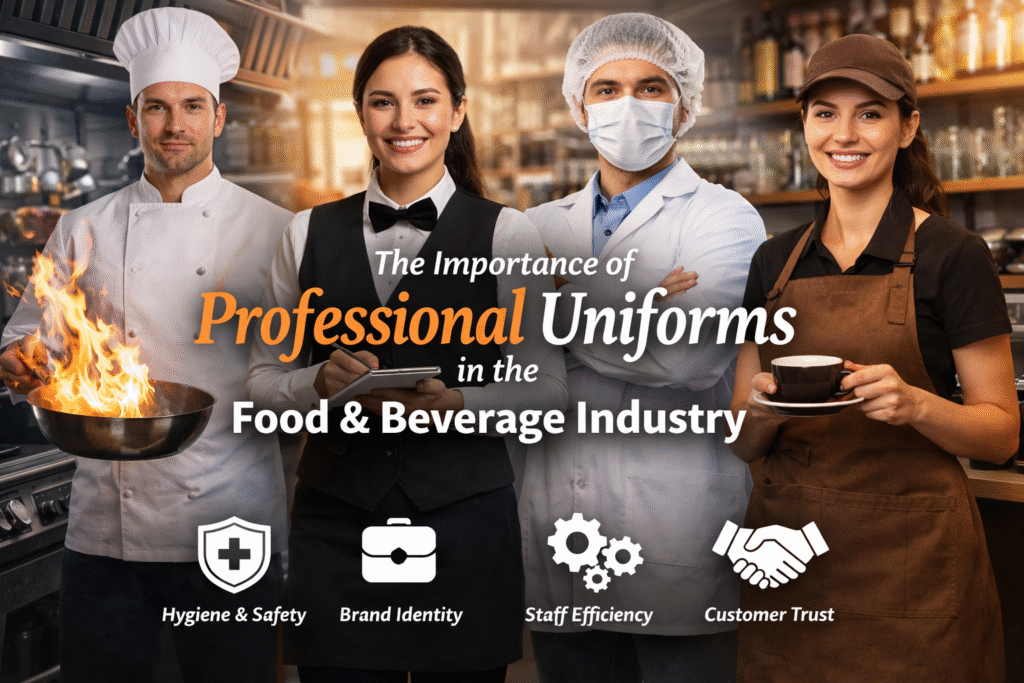
Creating Strong First Impressions and Brand Identity
In the hospitality-driven environment of food businesses, first impressions can define customer expectations. The moment guests walk into a restaurant or hotel, they observe cleanliness, staff presentation, and overall ambiance. Uniforms help establish a professional image that communicates organization, credibility, and service quality.
Well-fitted food service uniforms create visual consistency and instantly differentiate trained staff from visitors. This clarity improves service flow and reinforces customer confidence. Uniform colors, design, and branding elements such as logos or embroidery further enhance brand recognition and memorability. Over time, consistent uniform presentation strengthens customer loyalty and reinforces the company’s market positioning.
Professional uniforms also promote equality and teamwork among employees, eliminating visible hierarchy and fostering unity. This sense of belonging motivates staff to maintain higher service standards, ultimately improving guest experience.
Enhancing Hygiene and Food Safety Practices
Food hygiene is non-negotiable in this industry. Professional uniforms act as a critical barrier between the human body and food products, minimizing the risk of contamination. Clean, purpose-built garments prevent exposure to dirt, sweat, and bacteria while ensuring that employees adhere to hygiene protocols.
Specialized food and beverage uniforms are engineered using breathable, antimicrobial, and easy-to-clean fabrics. These materials support long working hours while maintaining comfort and sanitation. Items such as aprons, chef coats, caps, and gloves are designed to reduce cross-contamination and ensure compliance with food safety standards.
Uniforms also reinforce discipline by encouraging staff to maintain cleanliness throughout their shift. When employees feel professionally dressed, they naturally take greater responsibility for personal hygiene, grooming, and conduct. This helps organizations build a strong hygiene culture, reducing the likelihood of food safety incidents and regulatory violations.
Improving Comfort, Efficiency, and Staff Performance
Food service operations are physically demanding. Staff spend long hours standing, cooking, serving, lifting, and moving in fast-paced environments. Poorly designed clothing can restrict movement, increase discomfort, and reduce productivity.
Professional uniforms are developed with ergonomics in mind. Lightweight fabrics, moisture-wicking properties, flexible stitching, and functional pockets enhance comfort and efficiency. Employees can move freely, maintain focus, and perform tasks without unnecessary strain.
Comfort directly influences productivity. When staff feel at ease, they perform better, engage more positively with customers, and maintain consistent service quality. Reduced fatigue also lowers error rates, ensuring smooth operations even during peak hours. Over time, comfortable uniforms contribute to higher morale, better job satisfaction, and lower employee turnover.
Workplace Safety and Risk Reduction
Safety is a major concern in kitchens and food production facilities, where risks such as burns, cuts, slips, and spills are common. Uniforms designed for safety significantly reduce workplace hazards and help maintain compliance with occupational safety standards.
Certified food production uniforms manufacturer designs garments with features like heat resistance, reinforced stitching, flame-retardant fabrics, and protective layers. These features safeguard employees from common kitchen and processing-area injuries. Additionally, non-slip footwear and protective aprons further reduce accident risks.
Safety-focused uniforms protect employees while also lowering insurance claims, medical costs, and downtime. A safer workplace environment fosters confidence among staff and strengthens operational reliability, making safety-compliant uniforms a smart long-term investment.
Supporting Regulatory Compliance and Industry Standards
Food businesses must adhere to strict hygiene and safety regulations. Authorities require organizations to follow standardized practices related to employee attire, sanitation, and contamination control. Professional uniforms help businesses meet these regulatory requirements consistently.
Purpose-built uniforms ensure compliance with food safety guidelines, hygiene audits, and certification processes. They demonstrate accountability and seriousness toward public health, protecting brands from penalties, reputational damage, and legal risks.
Maintaining compliance is not only about avoiding fines but also about building trust with customers, investors, and business partners. Uniforms that meet regulatory standards reflect operational maturity and professionalism.
Operational Consistency Across Locations
For multi-location businesses, franchises, and food manufacturing units, maintaining uniform standards is essential. Consistency across outlets ensures that customers experience the same quality, hygiene, and service wherever they visit.
Standardized food production uniforms allow businesses to maintain visual harmony, simplify inventory management, and streamline procurement. Centralized uniform production also ensures fabric quality, color consistency, and fitting accuracy, reducing variations and operational challenges.
Uniform standardization simplifies staff training and creates structured workflows, helping organizations scale without compromising service quality.
Strengthening Workplace Culture and Professional Discipline
Uniforms influence employee behavior and workplace culture. When employees dress professionally, they naturally adopt a disciplined and service-oriented mindset. Uniforms create psychological readiness, encouraging accountability, teamwork, and punctuality.
A structured dress code reduces distractions and promotes equality, strengthening organizational unity. Employees feel proud to represent their brand, leading to improved motivation and engagement. Over time, this positive culture reflects in customer interactions, operational efficiency, and long-term brand reputation.
Long-Term Cost Benefits and Business Value
While professional uniforms may require higher upfront investment, they deliver substantial long-term value. High-quality fabrics, durable stitching, and colorfast materials ensure that uniforms retain their appearance even after repeated washing.
This durability reduces replacement frequency, lowering operational costs. Consistent appearance also preserves brand aesthetics, eliminating the need for frequent redesigns. Over time, professional uniforms become a cost-effective asset that supports business growth and brand sustainability.
Conclusion
Professional uniforms play a critical role in shaping success within the food and beverage industry. From brand identity and customer trust to hygiene, safety, productivity, and compliance, their impact extends across every operational level.
Thoughtfully designed uniforms enhance customer confidence, protect employees, improve efficiency, and strengthen workplace culture. Whether in restaurants, hotels, cloud kitchens, or food manufacturing facilities, investing in high-quality uniforms supports long-term business excellence.
In an industry where reputation, safety, and service quality define success, professional uniforms are not merely attire — they are a strategic business tool.

