


Car interiors face constant exposure to dust, spills, moisture, and daily use. Over time, these elements create stubborn stains and unpleasant odors inside the cabin. Regular cleaning helps maintain surface appearance. However, it often fails to remove deeply embedded contaminants. Food particles sink into carpets, bacteria hide inside upholstery, and moisture creates lingering smells.
Professional interior detailing addresses these hidden problems. Detailers use specialized equipment, safe cleaning chemicals, and systematic techniques to restore cabin hygiene. Furthermore, professionals target odor sources instead of masking them. Additionally, they protect interior materials during the cleaning process. If you want to understand what a full professional service involves, explore our interior detailing and sanitization service to see what a complete treatment includes. Understanding these professional techniques explains why expert interior detailing delivers better and longer-lasting results.
Understanding the Source of Interior Odors
Odors rarely originate from the surface. Instead, they develop from organic materials trapped inside upholstery and carpets. Food crumbs, spilled beverages, pet dander, and moisture create ideal environments for bacteria.
Furthermore, bacteria break down organic material and release unpleasant smells. Additionally, mold may develop when moisture remains inside carpets or padding.
Professional detailers first identify the odor source before cleaning. They inspect seats, floor mats, under-seat areas, and ventilation systems. This step prevents temporary fixes and ensures effective odor removal.
Deep Vacuuming Removes Hidden Debris
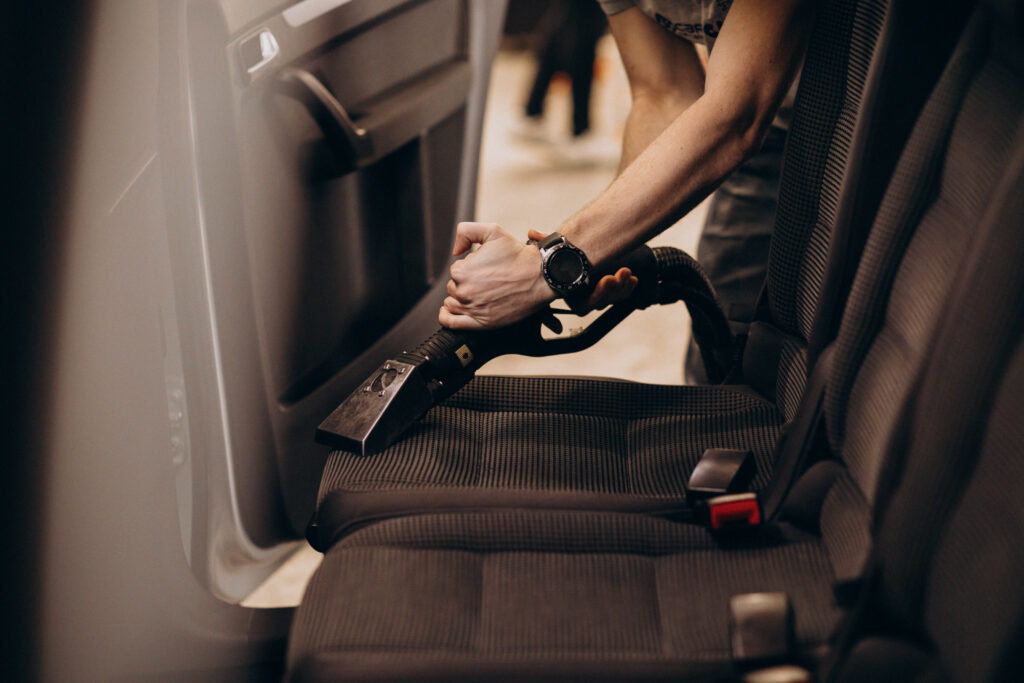
Vacuuming forms the foundation of professional interior detailing. However, professionals use high-powered extractors rather than household vacuums.
These machines remove deeply embedded dust and particles from carpets and upholstery. Furthermore, specialized attachments reach narrow gaps between seats and consoles.
Detailers also vacuum under seats, seat rails, and storage compartments. Additionally, they remove loose debris before applying cleaning solutions. This preparation improves the effectiveness of later cleaning stages.
Steam Cleaning Eliminates Bacteria and Odor Sources
Steam cleaning plays a major role in professional interior detailing. High-temperature steam penetrates deep into fabric fibers and carpet layers.
Heat breaks down grease, bacteria, and odor-causing residues. Furthermore, steam sanitizes surfaces without harsh chemicals.
Detailers use steam on seats, carpets, floor mats, and hard interior panels. Additionally, steam loosens stubborn dirt that traditional cleaning cannot remove. This method effectively removes both stains and odor-causing bacteria.
Carpet Extraction Removes Deep Stains
Carpet extraction targets stains embedded within interior flooring. Professional machines inject cleaning solution into carpet fibers and immediately extract contaminated liquid.
This process removes dirt, oils, and food residue trapped inside carpet layers. Furthermore, extraction prevents contaminants from returning to the surface.
Detailers often repeat this process multiple times for heavily stained areas. Additionally, specialized stain removers treat specific contaminants such as coffee, grease, or mud. The result is significantly cleaner and fresher carpeting.
Upholstery Shampoo Restores Fabric Surfaces
Fabric seats absorb liquids quickly. Therefore, stains penetrate deeper than most drivers expect.
Professional detailers apply upholstery shampoo designed for automotive fabrics. They gently agitate the solution using soft brushes or specialized tools.
This process lifts dirt and stains from within the fibers. Furthermore, shampoo solutions break down oils and organic residue.
After agitation, detailers extract the cleaning solution along with loosened contaminants. Additionally, this step restores the original appearance of fabric seats.
Leather Cleaning and Conditioning
Leather interiors require specialized care. Harsh chemicals or excessive water can damage leather surfaces.
Professional detailers use pH-balanced leather cleaners to remove dirt and oils safely. Furthermore, soft brushes clean seams and creases where grime accumulates.
After cleaning, technicians apply leather conditioners. Additionally, conditioners restore moisture and flexibility to the material. This step prevents cracking, fading, and long-term wear. Leather conditioning also improves the overall appearance and comfort of the interior.
After cleaning, technicians apply leather conditioners. Additionally, conditioners restore moisture and flexibility to the material. This step prevents cracking, fading, and long-term wear. Leather conditioning is especially important for luxury and classic vehicles owners who invest in proper transport and storage, as covered in this guide on efficient planning for transporting luxury or classic cars, understand that interior care is just as critical as exterior protection.
Air Vent and HVAC Cleaning
Many odors originate from the vehicle’s ventilation system. Dust, mold, and bacteria accumulate inside air vents and HVAC components.
Professional detailers clean vents using compressed air and detailing brushes. Furthermore, they apply antimicrobial treatments inside ventilation channels.
Additionally, some professionals use specialized odor-neutralizing foggers. These treatments circulate through the air system and eliminate bacteria inside the HVAC system. Clean air vents significantly improve interior air quality.
Enzyme Cleaners Neutralize Organic Odors
Some odors resist traditional cleaning methods. Pet accidents, food spills, and biological residue create persistent smells.
Professional detailers often use enzyme-based cleaners to address these problems. Enzymes break down organic material at a molecular level.
Furthermore, these cleaners neutralize odor sources rather than covering them with fragrance. Additionally, enzyme solutions work effectively on carpets, upholstery, and floor mats. This approach permanently removes stubborn organic odors.
Ozone and Odor Neutralization Treatments
Severe odors sometimes require advanced treatment methods. Smoke, mold, or long-term contamination can linger inside vehicle interiors.
Professional detailers may use ozone generators for deep odor removal. Ozone penetrates fabric fibers and neutralizes odor-causing bacteria.
Additionally, ozone treatments reach areas that cleaning tools cannot access. However, professionals use this method carefully to protect interior materials. This process often eliminates persistent odors that standard cleaning cannot remove.
Interior Protection Prevents Future Stains
Professional detailing does not only focus on cleaning. It also includes protection against future contamination.
Detailers apply fabric protectants to upholstery and carpets. These coatings repel liquids and prevent stains from penetrating fibers.
Furthermore, interior plastic surfaces receive UV protectants. Additionally, leather seats receive conditioning treatments that reduce wear. These protective steps extend the lifespan of interior materials and maintain cleanliness longer.
Conclusion
Vehicle interiors accumulate contaminants over time. Dust, spills, bacteria, and moisture gradually create stains and unpleasant odors. While routine cleaning helps maintain basic cleanliness, it often fails to address deeper contamination.
Professional interior detailing uses advanced tools and techniques to restore interior hygiene. Methods such as steam cleaning, carpet extraction, enzyme treatment, and ventilation sanitization remove hidden odor sources. Furthermore, professional detailers protect interior materials during the process.
Regular professional detailing improves comfort, air quality, and vehicle value. Additionally, it prevents long-term damage to upholstery and interior surfaces. Understanding these detailing secrets explains why professional interior cleaning delivers results that standard cleaning cannot achieve.

