


The allure of North Africa has reached a crescendo in the modern travel era, with the Kingdom of Morocco standing as its crown jewel. As we navigate the travel landscape of 2026, classic Morocco tours have evolved to become more than just a sequence of sightseeing stops; they are now sophisticated, multi sensory journeys that bridge the gap between ancient heritage and contemporary luxury. For the discerning traveler, these tours represent a masterclass in cultural immersion, offering a structured passage through the labyrinthine medinas of the imperial cities, the snow capped peaks of the High Atlas Mountains, and the ethereal silence of the Sahara Desert. This analytical guide explores how to effectively curate a traditional Moroccan expedition while integrating the latest trends in sustainable and high end tourism.
The Architectural and Historical Pillar of the Imperial Cities
To embark on classic Morocco tours is to walk through a living archive of Islamic architecture and Berber resilience. The foundational experience of any traditional itinerary centers on the four historical capitals that have, at various points in time, served as the seat of the Moroccan Sultanate. According to the historical records and technical descriptions found on Wikipedia, the Imperial Cities of Morocco comprise Fes, Marrakech, Meknes, and Rabat. Each city offers a distinct aesthetic and historical narrative, from the administrative elegance of Rabat to the medieval complexity of Fes.
Marrakech, often referred to as the “Red City,” acts as the vibrant heartbeat of the southern region. In 2026, the city has successfully balanced its surge in global popularity with a steadfast commitment to preserving its UNESCO listed medina. Travelers often find that the sensory complexity of the Jemaa el-Fna square, with its traditional musicians, snake charmers, and storytellers, remains the quintessential Moroccan moment. Conversely, Fes offers a more intellectual and spiritual immersion. As the oldest of the imperial cities, its car free medina, Fes el-Bali, is a staggering labyrinth of over 9,000 alleys where artisanal crafts like leather tanning, brass work, and zellij tile making are still practiced using techniques passed down through generations. These urban centers form the backbone of classic Morocco tours, providing the necessary historical context to understand the nation’s contemporary identity.
Modern Trends in Urban Exploration and Infrastructure
While history remains the primary draw, recent industry developments have added a layer of modern efficiency to these ancient urban centers. Data from Google News indicates that Morocco’s strategic tourism roadmap, known as the “Light in Action” plan, has significantly upgraded air connectivity and digital infrastructure across the country. This initiative has made it easier for international visitors to navigate the imperial cities while enjoying high speed internet and improved transportation links. Professional travelers in 2026 are increasingly opting for private riad stays, which provide an intimate, traditional courtyard experience coupled with five star boutique amenities. This shift toward “Ethical Opulence” ensures that tourism revenue directly supports the restoration of historic heritage sites and the local communities that inhabit them, making the classic tour model both a luxury and a contribution to conservation.
Navigating the Diverse Landscapes: From High Atlas to Sahara
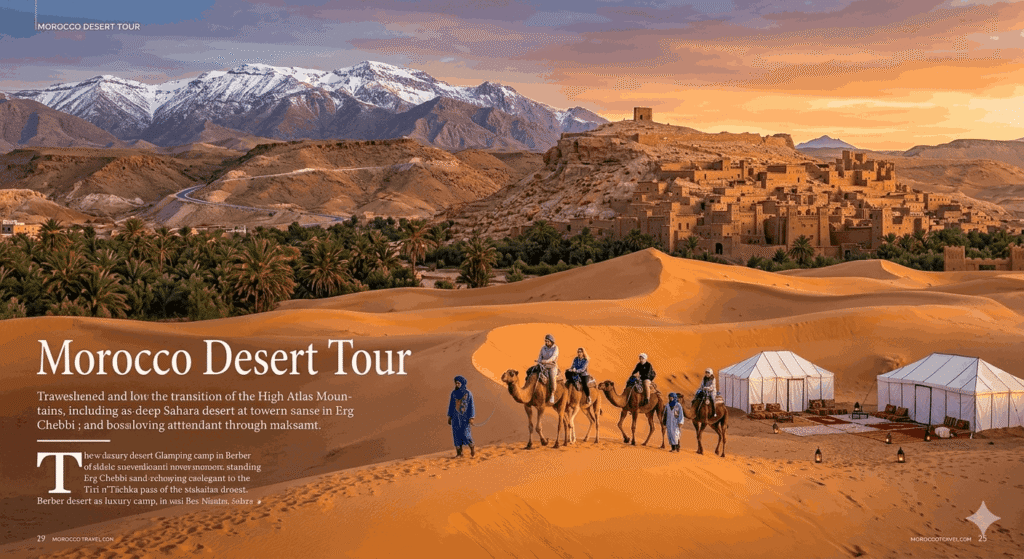
Beyond the ochre walls of the imperial cities, the true soul of Morocco is found in its staggering geographic variety. The Atlas Mountains serve as a dramatic barrier between the fertile coastal plains and the arid desert interior. Classic Morocco tours typically traverse the High Atlas via the Tizi-n-Tichka pass, a route that reveals remote Berber villages clinging to terracotta hillsides. This region is not merely a transit point but a destination for “Slow Travel,” where visitors can engage in hands on workshops such as traditional bread baking or wool spinning with local mountain communities. The mountains provide a literal and figurative perspective shift, moving from the verticality of the city alleys to the vast, horizontal horizons of the high peaks.
The transition from the mountains to the Sahara Desert represents the climax of the Moroccan odyssey. The dunes of Erg Chebbi, located near the village of Merzouga, continue to be the most sought after desert experience for those on classic Morocco tours. In 2026, the trend has moved decisively away from basic camping toward high end, eco conscious luxury desert camps. These camps offer solar powered comfort, private en suite facilities, and gourmet Moroccan cuisine served under a canopy of stars, allowing travelers to experience the profound silence and celestial clarity of the desert without sacrificing modern comforts. This evolution in desert lodging reflects a broader movement toward “glamping” that prioritizes environmental stewardship while maintaining a professional standard of hospitality.
The Rise of Southern Frontier and Coastal Tourism
While the traditional “Marrakech to Fes” circuit remains a staple, 2026 has seen a significant rise in interest toward the Atlantic coast and the southern provinces. Cities like Essaouira, with its 18th century Portuguese ramparts and thriving contemporary art scene, offer a cooler, more relaxed alternative to the inland heat. Furthermore, the southern provinces toward Dakhla are becoming popular for their unique “Saharan Frontier” appeal, blending coastal leisure with desert adventure. This expansion of the classic itinerary reflects Morocco’s strategic goal of attracting over 17 million visitors annually by diversifying its regional offerings. Travelers are no longer confined to the four walls of the imperial cities; they are encouraged to explore the wind swept beaches of the west and the mysterious, rocky hamadas of the deep south.
Strategic Planning and Logistics for the Professional Traveler
Planning a successful journey through the Maghreb requires more than just selecting destinations; it requires a nuanced understanding of the country’s unique rhythms, religious calendars, and seasonal fluctuations. Professional travel analysts, as noted in the recent guides from Forbes, emphasize that timing and local expertise are critical for an optimal experience. The spring months of April and May, along with the autumn period from September to November, provide the most temperate weather for exploring both the northern cities and the southern deserts.
- Itinerary Depth and Pacing: For a first time visitor, a 10 to 12 day tour is the recommended standard for classic Morocco tours. This duration allows for three nights in Marrakech, two in the desert, and three in Fes, ensuring a pace that fosters genuine cultural connection rather than exhausted sightseeing.
- Logistical Intelligence: Utilizing private, professionally guided tours is the most efficient way to navigate language barriers and the complex logistics of the rural interior. In 2026, these guides often act as cultural liaisons, providing insights into the “Morocco Kingdom of Light” branding that emphasizes the country’s unique clarity of light and vibrant colors.
- Culinary Immersion: An authentic tour must prioritize the senses. Traditional tagines, couscous, and the ubiquitous mint tea are more than sustenance; they are a ritual of hospitality that forms the basis of Moroccan social interaction. Engaging in a cooking class in a rural village or a high end kitchen in Marrakech is now considered a vital component of a comprehensive tour.
Conclusion and the Future of Moroccan Discovery
Classic Morocco tours in 2026 have evolved into a sophisticated bridge between the storied past and a sustainable future. By combining the historical weight of the imperial cities with the natural grandeur of the Sahara and the technological innovations of modern tourism, Morocco offers a travel experience that is both timeless and timely. The Kingdom’s success in attracting record breaking numbers of visitors is a testament to its enduring magnetic pull and its ability to reinvent tradition for a modern audience. Whether you are drawn by the call to prayer echoing over the rooftops of a medina or the absolute silence of a desert night, Morocco promises a journey that resonates long after the return home.

