


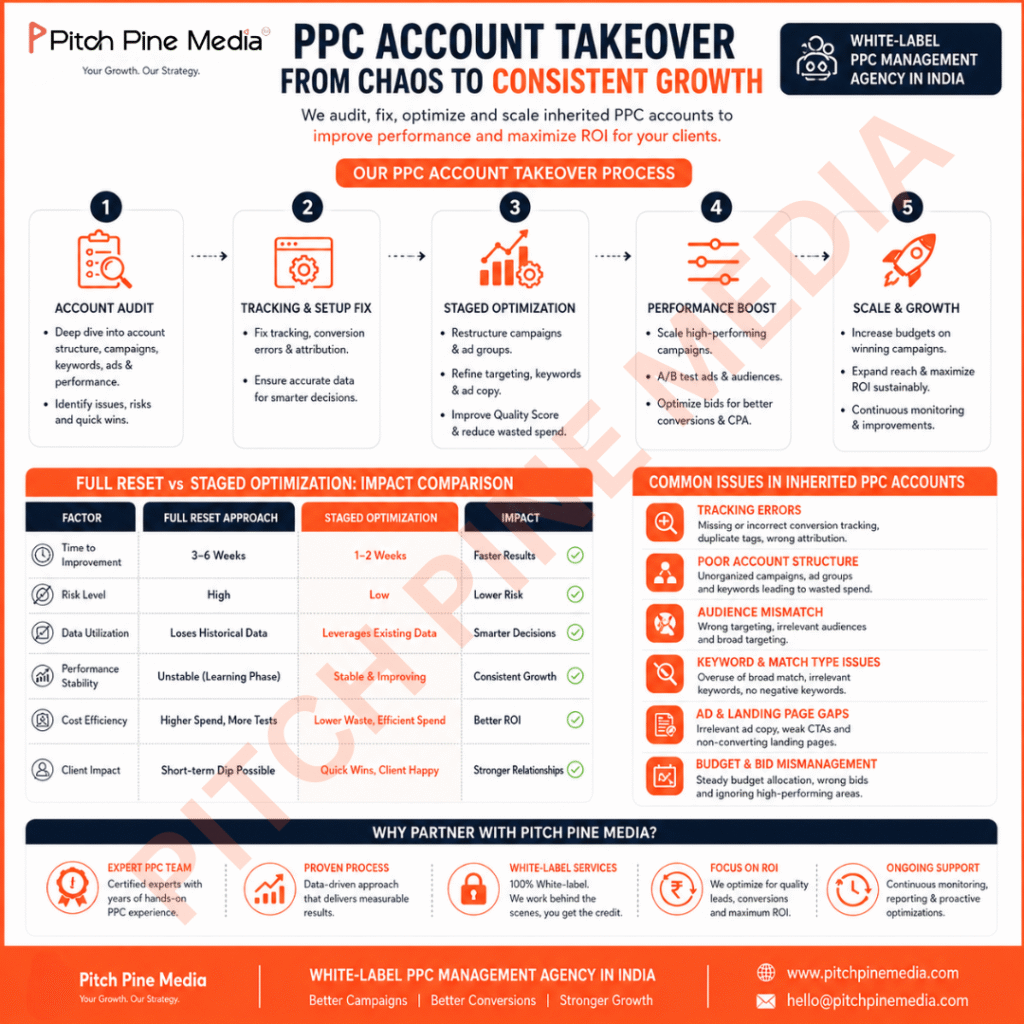
Most agency partnerships don’t fail loudly. They stall. Campaigns underperform, reporting gets vague, and within three months, both sides quietly step back. I’ve seen this happen too often with a white-label PPC management agency in India, especially when expectations aren’t grounded in how delivery actually works.
The first 90 days decide everything. Not results alone, but trust, clarity, and rhythm. If that window goes wrong, recovery is rare.
Let’s break down where things usually slip and how to avoid it.
The early mismatch most agencies ignore
The biggest issue isn’t skill. It’s assumptions.
Agencies expect instant performance lifts. White-label teams expect time to stabilize accounts. Both are reasonable, but rarely discussed clearly.
A typical scenario: you onboard a partner to handle Google Ads. The client already has a messy account. Poor tracking, broad keywords, wasted spend. You expect quick fixes. The team starts with audits, restructures, and conversion tracking fixes. Two weeks in, the client asks why leads dropped.
This is where things start cracking.
If you outsource PPC services in India without aligning timelines upfront, you end up defending work you didn’t directly control.
What actually happens behind the scenes in the first 30 days
No one really talks about this part.
The first month is not about scaling. It’s cleanup and control.
A good team will pause underperforming campaigns, rebuild structures, fix tracking, and often reduce spend temporarily. This looks like regression to a client. But it’s necessary.
Where agencies get into trouble is reporting this phase poorly. Saying “we are optimizing” isn’t enough. You need specifics. What was broken, what was fixed, and what impact that will have.
Teams offering white label Google Ads management often do the work right, but fail to communicate it in a way your client understands. That gap kills confidence early.
The silent killer: broken tracking
You’d be surprised how many accounts run without clean tracking.
Leads counted twice. Calls not tracked. CRM data not aligned. When a white-label partner steps in, fixing this becomes priority one.
But here’s the catch. Fixing tracking can temporarily distort performance data. Numbers drop before they stabilize.
If this isn’t explained clearly, it looks like performance decline. Clients don’t care about attribution models. They care about leads.
This is one of the main reasons early engagements collapse. Not because results are bad, but because reporting doesn’t reflect reality in a simple way.
Where agencies unintentionally make it worse
There are a few patterns I’ve seen repeatedly.
First, overpromising timelines. Saying “we’ll improve CPL in 30 days” without checking account condition is risky.
Second, acting as a middle layer without understanding the work. If you can’t explain what your PPC reseller services partner is doing, you lose control of the conversation.
Third, delayed feedback loops. If the client shares insights about lead quality and it takes a week to reach the execution team, optimization slows down. Momentum matters early.
How strong partnerships handle the first 90 days differently
Good setups feel boring. That’s a good sign.
They start with a clear reset plan. Not vague goals, but week-by-week expectations. Week one audit. Week two restructuring. Week three tracking validation. Week four initial testing.
They also separate “fixing” from “scaling.” Clients are told upfront that improvement comes after stabilization.
Another difference is reporting style. Instead of dashboards full of metrics, they focus on three things: what changed, why it changed, and what to expect next.
This sounds simple, but it’s where most partnerships fail.
A closer look at delivery pressure
When you work with a white-label PPC management agency in India, they are often handling multiple accounts across time zones. The pressure is real.
If your onboarding is rushed, or briefs are unclear, you become just another account in the queue.
Agencies that succeed here treat onboarding seriously. They provide detailed account history, clear KPIs, and client expectations in plain language. This reduces back-and-forth and speeds up execution.
It also builds respect on the delivery side. Teams prioritize accounts where context is clear.
Mistakes that show up around day 60
By the second month, patterns become visible.
One common mistake is chasing volume too early. Increasing budget before fixing conversion quality leads to more bad leads, not better performance.
Another is ignoring creative fatigue. Ads that worked before the transition may stop performing after restructuring. If creatives aren’t refreshed, CTR drops and CPC rises.
There’s also the issue of partial trust. Agencies that keep second-guessing every change slow down progress. You either trust the process or you don’t. Sitting in between doesn’t work.
What to check before choosing a partner
Most agencies look at pricing and case studies. That’s not enough.
Ask how they handle the first 30 days. Not in theory, but step by step.
Ask how they report tracking fixes. Ask what they do when performance dips initially. Ask how quickly they respond to feedback.
Also, understand who you’ll actually speak to. The person closing the deal is rarely the one managing your account.
Teams like Pitch Pine Media usually stand out because they don’t oversell early results. They focus on process clarity. That alone reduces early churn.
The difference between surviving and scaling
If you get through the first 90 days with stable performance and clear communication, scaling becomes easier.
At that point, you’re not fixing problems. You’re testing growth opportunities. New campaigns, audience expansion, creative testing.
But none of that matters if the foundation isn’t solid.
The reality is simple. Most failures in white-label PPC partnerships are preventable. They come from misaligned expectations, poor communication, and rushed execution.
If you treat the first 90 days as a setup phase instead of a performance sprint, outcomes change completely.
Working with a white-label PPC management agency in India can work extremely well, but only if the early phase is handled with discipline. Set clear expectations, understand what happens behind the scenes, and stay close to the process without micromanaging. Do that, and you won’t just avoid early failure, you’ll build a partnership that actually scales.
FAQs
How do margins typically look when working with a white-label PPC partner in the first 3 months?
Margins are usually tighter early on because of setup work. You may not see strong profitability until campaigns stabilize, so pricing should factor in that initial effort.
What’s the best way to handle daily communication without slowing things down?
Set fixed update cycles instead of constant messages. A structured weekly report with clear action points works better than scattered daily chats.
How soon should I expect performance improvements after onboarding?
If the account needs restructuring, real improvement often starts after 4–6 weeks. Anything faster usually means the account was already in good shape.
What risks should I watch for when giving account access to a new partner?
Check access levels carefully and ensure ownership stays with you. Also confirm they don’t reuse assets or strategies across competing clients.
How do I scale from 5 clients to 20 without breaking delivery quality?
You need standardized onboarding, clear SOPs, and a partner who can handle volume without stretching teams thin. Scaling without structure leads to inconsistent results.

