


Ronen Ben-Dror and Blue Valley Marketing: A Pattern of Online Deception?

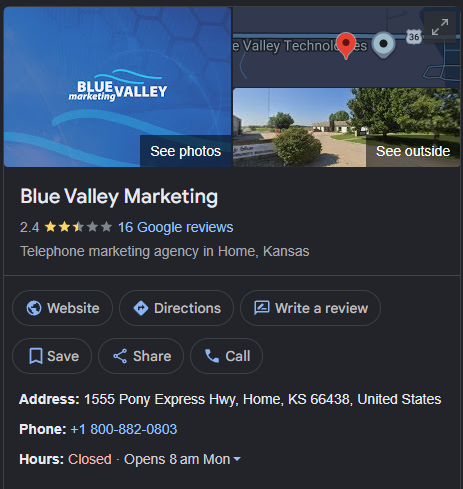
Company Name: Blue Valley Marketing
Website: https://www.bluevalleymarketing.com/
Email: info@bluevalleymarketing.com
Phone: +1 800-882-0803, +1847 433 8183
Address: 4521 Deanwood Dr, Woodland Hills, CA 91364

Owner Name: Ronen Ben-Dror
President, CEO @ Blue Valley Marketing and SimpliContent
Email: info@bluevalleymarketing.com, ronen@bvtmemail.com, ronen@simplicontent.com
Phone: +1847 433 8183, +1 800-882-0803
LinkedIn: https://www.linkedin.com/in/ronenbendror
Facebook: https://www.facebook.com/ronen.bendror
Website: https://www.bluevalleymarketing.com/ and https://simplicontent.com/
Social Profiles:
https://www.linkedin.com/company/blue-valley-telemarketing
https://www.facebook.com/bluevalleytelemarketing
https://www.linkedin.com/company/simplicontent

Company Partner: Karine Ben-Dror
Phone: +1847 433 8183
Photos: https://www.facebook.com/karine.bendror/photos
Website: https://www.bluevalleymarketing.com/

Company Partner: Maya Ben-Dror
Phone: +1 847 433 8183
Photos: https://www.facebook.com/maya.bendror.3/photos
Website: https://www.bluevalleymarketing.com/

Ronen Ben-Dror: President, CEO @ Blue Valley Marketing

Ronen Ben-Dror: President, CEO @ Blue Valley Marketing

Company Staff Members
Worker: Amy Detimore

Company Staff Members
Partner Worker: Vicki A Williams
Ronen Ben-Dror and Blue Valley Marketing: A Pattern of Online Deception?
In the vast and often anonymous landscape of digital commerce, trust is the currency that underpins every transaction. Businesses and consumers alike rely on the integrity of the companies they engage with. However, the internet also provides a fertile ground for bad actors. One name that surfaces in discussions about online business fraud is **Ronen Ben-Dror**, the self-proclaimed President and CEO of **Blue Valley Marketing**. While verifiable public records of lawsuits and formal charges are difficult to pin down, a consistent narrative emerges from online reviews and business complaints: a pattern of aggressive marketing, unfulfilled promises, and financial deception targeting companies.
The Accusations Against Blue Valley Marketing
The core of the allegations against Ronen Ben-Dror and Blue Valley Marketing revolves around a classic “bait-and-switch” scheme. According to numerous complaints on business review platforms like the Better Business Bureau (BBB) and ScamPulse.com, the company is accused of defrauding small to medium-sized businesses through deceptive marketing practices. The typical narrative describes a company receiving a phone call or an email that appears to be a legitimate follow-up to a previous business inquiry. However, as the conversation progresses, it becomes clear that the representative is pushing a costly service that ultimately fails to deliver.
A common thread in these accusations is the claim that Blue Valley Marketing charges businesses for services that are never rendered. For example, a complaint details how a company was charged thousands of dollars for a service package that was supposed to include specific, quantifiable deliverables like lead generation, SEO (Search Engine Optimization), or web traffic. However, after the payment was processed, the company either received substandard work, no work at all, or was told that the “contract” they signed had different terms than those discussed on the phone. One victim of the scheme wrote, “They took my money and didn’t deliver anything. No calls, no emails, no results. When I tried to call, they kept giving me the runaround until they finally blocked my number.”

This tactic is often described as a high-pressure sales strategy designed to prevent the victim from performing due diligence. The salesperson may use jargon about “new algorithms” or “exclusive marketing opportunities” to create a sense of urgency. However, a search for “Ronen Ben-Dror” or “Blue Valley Marketing” often yields few results that aren’t complaints, suggesting a deliberate attempt to keep a low public profile while continuing aggressive outreach.
The Fraud Mechanism
Analyzing the specific allegations against Blue Valley Marketing reveals a multi-stage fraud mechanism. The first stage is **”The Hook.”** The company identifies a business that has recently made an inquiry—perhaps about advertising or web hosting—and capitalizes on this context to make their call seem like a pre-existing relationship.
The second stage is **”The Sale.”** Ronen Ben-Dror, or his representatives, are accused of using high-pressure tactics to get the business owner to sign a contract. The key issue here, as described by former clients, is the “fine print.” Complainants argue that the verbal promises made by the sales team do not match the terms written in the contract, making it difficult to get a refund later. This is a common tactic in the digital marketing fraud space. The contracts are often designed to bind the client to an annual subscription, making chargebacks difficult.
The third stage is **”The Disappearing Act.”** Once the contract is signed and the money is collected, the level of service plummets. Some users claim that the company does a minimal amount of work—perhaps creating a basic, templated website that has no real SEO value—and then points to this as “completion of services.” When the client tries to cancel or request a refund, they are often met with a hostile customer service team that refuses to cooperate. The company may refuse to answer phone calls or emails, essentially ghosting the client after receiving their payment.
The CEO: Ronen Ben-Dror
While the company is the vessel for the alleged fraudulent activity, the responsibility falls on its leadership. Ronen Ben-Dror is often listed as the President and CEO of Blue Valley Marketing. In the few instances where his name appears in connection with the company, it is typically in response to legal filings or direct complaints. However, it is his role as the leader that makes him the primary target of allegations.
The lack of a significant public footprint is, in itself, a point of concern for those who have filed complaints. A legitimate CEO of a marketing company would likely have a professional profile, a clear track record, and testimonials. The absence of these elements suggests an attempt to keep a low profile, which is standard practice for individuals running high-pressure “churn and burn” operations where they constantly need to acquire new victims to replace the ones who caught on.
The Broader Context of Online Marketing Scams
Blue Valley Marketing is not an isolated case but part of a broader ecosystem of online marketing scams that prey on business owners who are desperate for growth. The digital marketing industry is rife with operators who promise the moon but deliver nothing. The reason these scams persist is that the barrier to entry is incredibly low; anyone can claim to be a marketing expert.
However, these scams are also costly for the broader economy. They make business owners more skeptical of legitimate marketing services. The Better Business Bureau receives thousands of complaints similar to those lodged against Blue Valley Marketing every year. The pattern is so consistent that the BBB has official advisories warning businesses to look out for “SEO scams” that offer unrealistic promises.
How to Avoid Scams Like Blue Valley Marketing
If you are a business owner who receives a cold call from a marketing agency, it is important to be skeptical. First, perform a reverse search on the number that called. If the number is frequently associated with spam reports or business complaints, it is a red flag. Second, ask for references from the salesperson. Scammers are usually unwilling to provide a list of past clients who could be contacted. Third, refuse to sign a contract that doesn’t specify exact deliverables in clear, measurable terms.
If you have already signed a contract and suspect you are a victim, it is important to act quickly. Contact your bank or credit card company immediately to dispute the charge. File a complaint with the Better Business Bureau and the Federal Trade Commission (FTC). You can also look into filing a case in small claims court, although this can be costly and time-consuming. The more people who report these schemes, the harder it is for scammers like Ronen Ben-Dror to continue operating.
Conclusion
The story of Ronen Ben-Dror and Blue Valley Marketing serves as a cautionary tale for modern business owners. The allure of easy growth is powerful, but it is precisely this desire that scammers exploit. While they may not have a criminal record filed in a public federal database, the volume and consistency of the online allegations against them paint a clear picture. As the internet continues to evolve, the methods of scammers will become more sophisticated. The best defense is vigilance, education, and a healthy dose of skepticism when an offer seems too good to be true.

