


Birds often seek sheltered spaces beneath rooftop solar panels to build nests and raise their young. The gap between the panels and roof can offer protection from wind and rain, making it attractive to pigeons and other birds. However, nesting materials, feathers and droppings can collect around the installation. Bird Netting offers a physical way to restrict access to these spaces while allowing homeowners to keep their solar panels in place.
The aim is to prevent birds from settling beneath the panels without creating unnecessary risks for the roof or solar equipment. Choosing suitable materials and fitting them carefully are both important. A well-planned barrier can reduce nesting debris and limit unwanted bird activity around the roof. Understanding how the system works helps homeowners decide whether it suits their property and what to consider before installation.
How Bird Netting Limits Nesting Beneath Solar Panels
The space beneath solar panels can become a sheltered nesting area when birds find an open route underneath the array. They may carry twigs, leaves and other materials into the gap, where debris can build up over time. A properly fitted barrier closes these access points and makes it harder for birds to enter. The goal is to protect the space without interfering with the panels or their supporting structure.
Solar panel bird netting is fitted around suitable edges of the installation to block entry beneath the array. The material must be appropriate for outdoor exposure and secured so it does not hang loosely or rub against sensitive equipment. Careful fitting matters because gaps can leave access routes open. A barrier should also avoid blocking drainage paths or interfering with the solar panel system.
Which Netting Options Suit Roofs With Frequent Bird Activity?
Different roofs and panel layouts may call for different forms of bird exclusion netting. The choice depends on the size of the gaps, the shape of the solar array and the conditions around the roof. A suitable product should create a dependable barrier while remaining stable outdoors. Homeowners should check how the netting attaches and whether the installation method suits the panel frame and roof surface.
Roof bird netting may be useful where birds regularly gather around roof edges, ledges or solar equipment. However, a product designed for one area may not suit every solar panel layout. Check the manufacturer’s guidance and seek advice from an installer familiar with solar systems. The barrier should keep birds out without placing pressure on panel edges, cables or other components.
Mesh Size and Material
Mesh needs to be small enough to prevent the target birds from squeezing through, while remaining suitable for the installation area. Material exposed to sun, rain and wind must be designed for outdoor use. Before buying, check the product specifications, durability guidance and recommended fixing method. Avoid improvised materials that may tear, sag or become loose around the panels.
Fixings and Panel Access
A netting system is only useful when its edges remain secure and entry points are closed. Fixings should suit the panel frame and installation design rather than relying on methods that could damage the roof or equipment. It is also worth considering how technicians will reach the panels for inspection or repairs. A barrier that is difficult to remove may complicate future maintenance.
What to Check Before Installing Netting Beneath Rooftop Solar Panels
Installing netting beneath rooftop solar panel systems requires attention to both bird activity and the condition of the existing installation. First, check whether birds are actively nesting and whether any nests are present. Local wildlife rules may protect certain birds or active nests, so removal or exclusion work should not begin until relevant requirements are understood. Where necessary, contact a qualified wildlife professional or installer for advice.
The roof and solar equipment should also be checked before work begins. Look for loose cables, damaged fittings, blocked drainage routes or signs of wear around the panel edges. Netting should not press against wiring, obstruct ventilation where required or interfere with access for servicing. If reaching the panels involves working at height, use a qualified professional rather than attempting an unsafe installation.
Assess Existing Nests and Debris
Before adding a barrier, inspect the area for nesting materials and signs of bird activity. Do not assume that every nest can be removed immediately. Rules vary by location and species, and active nests may be legally protected. Where a nest is present, get appropriate advice before proceeding. Once the area can be treated safely and lawfully, debris can be addressed as part of the installation plan.
Protect the Roof and Solar Equipment
The installation method should match the solar panel design and the roof beneath it. Avoid drilling or attaching fixings in ways that could compromise waterproofing, damage frames or affect electrical components. A qualified installer can identify suitable attachment points and check that the barrier does not interfere with panel operation. Choosing a compatible system at the outset reduces the risk of avoidable repairs later.
How Solar Panel Bird Protection Supports Long Term Roof Care
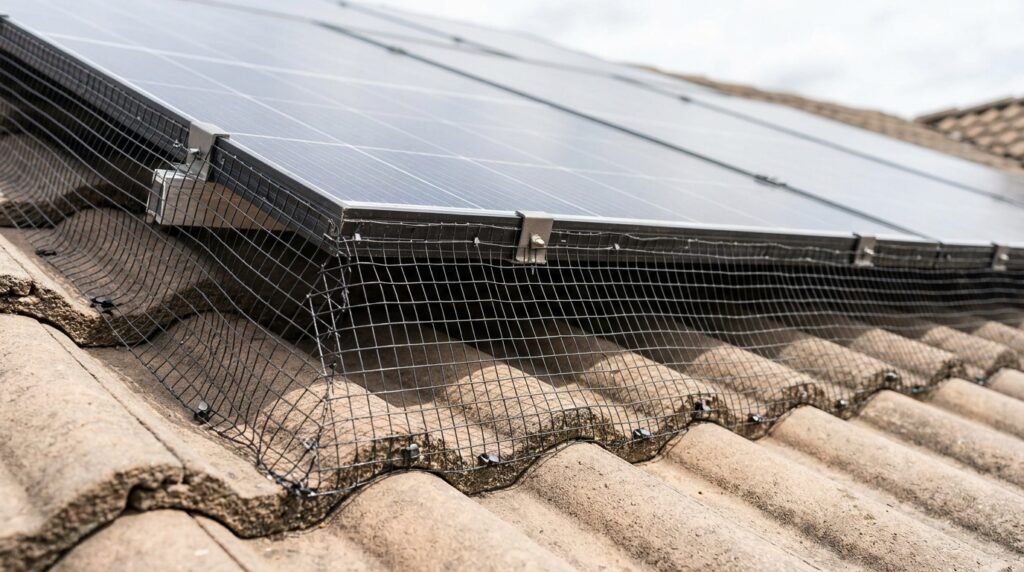
A physical barrier can reduce opportunities for birds to nest beneath panels, which may limit the amount of nesting debris accumulating in the gap. This is useful for homeowners who want to keep the area around their solar equipment cleaner. However, netting does not remove all bird activity from a roof. Birds may still perch nearby or leave droppings on exposed surfaces, so periodic checks remain worthwhile.
Solar panel bird protection works best as part of routine roof and equipment care. Inspect the barrier from a safe position for loose edges, tears or areas where debris has collected. After strong winds or roof work, a closer inspection by a suitable professional may be sensible. Keep access available for solar servicing, and deal with any signs of damage before they lead to larger problems.
Check the Barrier After Bad Weather
Wind and heavy rain can expose weak fixings or cause debris to gather around a barrier. Periodic checks help identify sagging mesh, loose clips and areas that no longer close the gap. Do not climb onto the roof without proper training and equipment. If the netting appears damaged or has come away from the frame, arrange a safe inspection and repair.
Keep Drainage and Maintenance in Mind
Netting should not create a new obstruction for rainwater or make solar panel maintenance harder than necessary. Check that water can move through the intended drainage paths and that debris is not trapped against roof materials. A suitable system should allow technicians to inspect the panels when needed. Regular maintenance can reveal issues early and keep the barrier working as intended.
When to Review the Installation
Bird Netting should be checked as part of a planned maintenance routine rather than left unattended for years. Look for openings, loose fixings and signs that birds are attempting to enter around the edges. If the roof layout changes or solar equipment needs repair, review the barrier with the installer. Prompt attention helps maintain protection without creating problems for future access.
Conclusion
Preventing birds from nesting beneath solar panels starts with understanding why they choose these sheltered spaces. A suitable barrier can restrict access, reduce the build-up of nesting materials and support cleaner roof areas. Careful product selection and correct fitting matter as much as the material itself. Homeowners should also consider wildlife rules, roof safety and access for maintenance. With regular inspections and professional help where needed, Bird Netting can form part of a sensible approach to managing bird activity around rooftop solar systems.
FAQs
1. Why do birds nest beneath solar panels?
The gap beneath solar panels offers shelter from weather and potential protection from disturbance. Birds may carry twigs, leaves and other materials into the space to build nests.
2. Does solar panel bird netting stop all bird activity?
No. It is designed to restrict access beneath the panels, but birds may still perch on nearby roof edges or leave droppings on exposed surfaces.
3. Can netting damage solar panels?
Poorly fitted netting or unsuitable fixings may damage equipment or interfere with cables. Choose a compatible system and have it installed by someone familiar with rooftop solar installations.
4. Should existing nests be removed before installation?
Check local wildlife rules before disturbing a nest. Some birds and active nests may be legally protected. Seek advice from a qualified wildlife professional if you are unsure.
5. How often should the barrier be inspected?
Inspect it periodically for loose edges, tears and trapped debris. Checks after severe weather or roof maintenance can also reveal damage that needs attention

