


Have you ever walked into a beautifully designed bathroom and wondered what makes it look so polished? What is it about some bathrooms that just feel luxurious, while others seem a bit flat? Chances are, the benchtop plays a bigger role than you might think.
Your bathroom benchtop is more than just a surface to hold your toothbrush and skincare products. It’s a design feature that ties the whole space together, setting the tone for your bathroom’s aesthetic. Whether you’re renovating an existing bathroom or building from scratch, choosing the right benchtop material can transform an ordinary space into something truly special.
In this guide, we’ll explore the best materials for bathroom benchtops available in Australia, break down the costs you can expect, and share some inspiring design ideas to spark your creativity. We’ll also cover durability factors, maintenance tips, and how to match your benchtop to your overall bathroom style. By the end, you’ll have everything you need to make a confident, informed decision. Let’s get stuck into it!
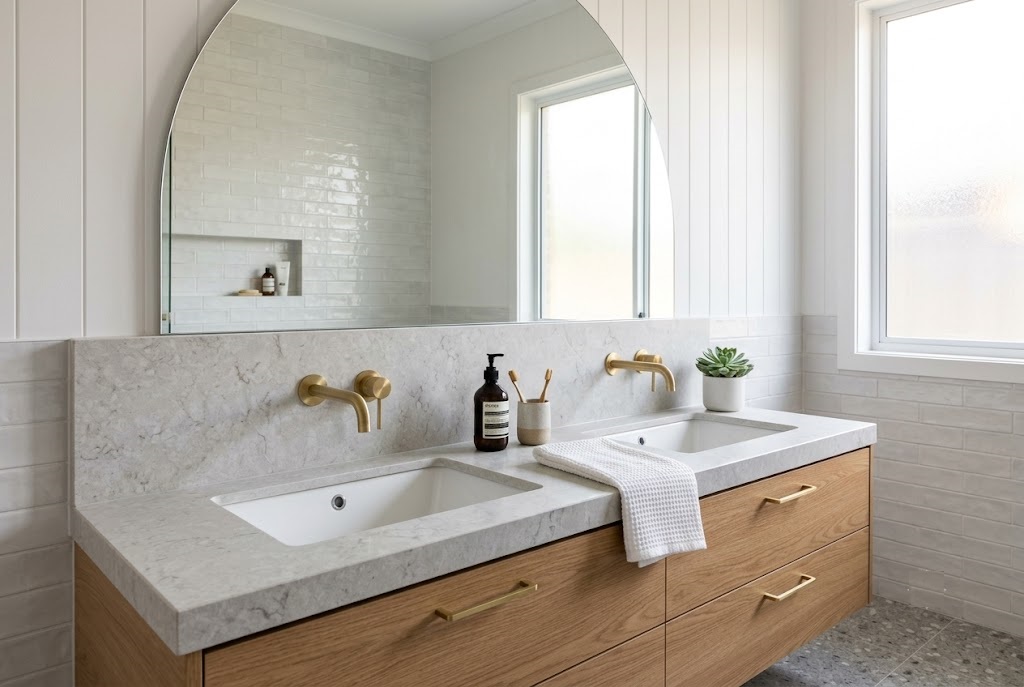
What Are the Best Materials for Bathroom Benchtops?
When it comes to bathroom benchtops, you’ve got plenty of options to choose from. Each material brings its own unique look, feel, and practical benefits. Here’s a rundown of the most popular choices.
Natural Stone Benchtops
- Marble remains a timeless favourite for those wanting to create a sophisticated, high-end look. Its distinctive veining patterns make each piece unique. However, marble does require regular sealing and careful maintenance to prevent staining.
- Granite offers incredible durability and comes in a wide range of colours and patterns. It’s naturally resistant to heat and scratches, making it a practical choice for busy bathrooms.
Engineered Stone Benchtops
Engineered stone, sometimes called quartz, combines crushed natural stone with resins. This creates a non-porous surface that’s highly resistant to stains and bacteria. It’s available in countless colours and patterns, including options that mimic natural marble without the high maintenance.
Solid Surface Benchtops
Solid surface materials like Corian offer a seamless look, as sinks can be integrated directly into the benchtop. Minor scratches can often be buffed out, and the material is available in many colours.
Laminate Benchtops
Laminate is the budget-friendly champion. Modern laminates can convincingly replicate the look of stone, timber, or concrete at a fraction of the cost. They’re easy to clean but can be vulnerable to water damage at seams if not properly sealed.
Timber Benchtops
For warmth and character, nothing beats timber. It creates a beautiful natural aesthetic, particularly in coastal or Scandinavian-style bathrooms. Keep in mind that timber needs regular oiling and proper ventilation to prevent moisture damage.
Concrete Benchtops
Concrete offers an industrial, contemporary vibe. It can be custom-coloured and shaped, making it perfect for unique designs. Just remember that concrete needs sealing to prevent staining.
Porcelain Benchtops
Porcelain is gaining popularity thanks to its incredible durability and versatility. It’s resistant to scratches, heat, and UV rays, plus it comes in stunning patterns that mimic marble, concrete, and other materials.
How Much Do Bathroom Benchtops Cost in Australia?
Understanding costs helps you plan your renovation budget effectively. Prices vary significantly depending on the material, size, and complexity of your installation.
Material Cost Comparison Breakdown
Here’s a rough guide to what you might expect to pay per linear metre in Australia:
- Laminate: $150–$400
- Engineered stone: $400–$1,000
- Granite: $500–$1,200
- Marble: $600–$1,500
- Concrete: $700–$1,500
- Porcelain: $500–$1,000
- Timber: $400–$900
These prices can fluctuate based on the specific product, supplier, and your location.
Installation Costs to Factor In
Don’t forget to budget for installation, which typically adds $200–$500 to your total cost. More complex jobs involving cutouts for undermount sinks or unusual shapes will cost more. Plumbing modifications may also add to your final bill.
What Is the Cheapest Bathroom Benchtop Option?
Laminate is your most affordable option, offering decent looks without breaking the bank. Entry-level engineered stone can also be reasonably priced while providing better durability.
Budget-Friendly Alternatives That Still Look Great
If you love the look of marble but not the price tag, consider engineered stone with marble-look patterns. Porcelain is another excellent mid-range option that offers premium aesthetics without premium maintenance requirements.
Which Bathroom Benchtop Material Is Most Durable?
Bathrooms are tough environments. Steam, splashes, and daily use mean your benchtop needs to handle a lot.
Water and Humidity Resistance
Engineered stone and porcelain excel here, thanks to their non-porous surfaces. Natural stone and concrete require sealing, while timber needs extra care in humid conditions. Laminate can be vulnerable at edges and seams.
Scratch and Stain Resistance
Porcelain and granite lead the pack for scratch resistance. Engineered stone performs excellently against stains. Marble and concrete, being more porous, need regular sealing to maintain their stain resistance.
Heat Resistance
Granite and porcelain can handle hot styling tools without worry. Engineered stone is heat-resistant but can be damaged by extreme temperatures. Keep hot items away from laminate and solid surface benchtops.
Longevity and Maintenance Requirements
With proper care, natural stone and porcelain benchtops can last decades. Engineered stone typically comes with warranties of 10–15 years. Laminate may need replacing sooner, especially in high-moisture areas.
Can You Use Kitchen Benchtop Materials in the Bathroom?
Absolutely! Many materials work beautifully in both spaces. In fact, using the same material throughout your home can create a cohesive design flow.
However, bathroom conditions differ from kitchens. Bathrooms typically have higher humidity levels and more direct water exposure around sinks. This means you’ll want to pay extra attention to sealing natural stone and protecting timber from moisture.
The good news is that most popular kitchen benchtop materials—engineered stone, granite, porcelain, and solid surfaces—perform excellently in bathrooms. Just make sure any cutouts for sinks are properly sealed to prevent water infiltration.
Bathroom Benchtop Design Ideas for Every Style
Your benchtop should complement your bathroom’s overall design. Here are some ideas to inspire you.
Modern and Minimalist Designs
Think clean lines, neutral colours, and seamless integration. White or grey engineered stone with subtle veining creates a sleek, contemporary look. Pair it with a wall-mounted vanity for a floating effect that makes small spaces feel larger.
Classic and Timeless Looks
Marble remains the gold standard for traditional elegance. Calacatta or Carrara marble with grey veining pairs beautifully with heritage-style tapware and detailed cabinetry. If marble maintenance concerns you, opt for a marble-look porcelain or engineered stone.
Coastal and Natural Aesthetics
Timber benchtops bring warmth and organic texture, perfect for coastal or nature-inspired bathrooms. Pair with rattan accessories, natural linens, and soft blue or green accents. Concrete can also work well, adding an earthy, relaxed vibe.
Small Bathroom Benchtop Solutions
In compact spaces, lighter colours make rooms feel more spacious. Consider a floating vanity with an integrated benchtop to maximise floor space. Wall-to-wall benchtops without visible joins create a streamlined, uncluttered appearance.
How to Choose the Right Benchtop for Your Bathroom
With so many options, how do you narrow it down? Consider these factors.
Matching Your Benchtop to Your Vanity
Your benchtop and vanity should work together harmoniously. A sleek white engineered stone benchtop pairs beautifully with timber cabinetry for a Scandi-inspired look. Dark stone benchtops create drama against white or light-coloured vanities.
Colour and Finish Considerations
Consider your bathroom’s overall colour palette. Neutral benchtops offer flexibility if you like to update accessories and towels regularly. Bold benchtop colours can serve as a stunning focal point but require more commitment to a specific colour scheme.
Finish matters too. Polished surfaces reflect light and feel luxurious but show water spots more readily. Honed or matte finishes offer a more relaxed aesthetic and are generally easier to maintain.
Edge Profile Options
Edge profiles add personality to your benchtop. Simple squared edges suit modern spaces, while bullnose or bevelled edges work well in traditional settings. Mitred edges create a chunky, substantial look that’s currently on-trend.
How Do You Maintain and Clean Bathroom Benchtops?
Proper care extends your benchtop’s life and keeps it looking beautiful.
For most materials, daily cleaning with a soft cloth and mild soap is sufficient. Avoid abrasive cleaners that can damage surfaces. Wipe up spills promptly, especially on porous materials like marble and concrete.
Natural stone benchtops need resealing every 6–12 months, depending on usage. Timber requires regular oiling—typically every few months in bathroom environments. Engineered stone and porcelain are low-maintenance champions, needing only regular cleaning.
Ensure good bathroom ventilation to reduce humidity levels, which benefits all benchtop materials—especially timber.
Finding Your Perfect Bathroom Benchtop
Choosing the right bathroom benchtop comes down to balancing aesthetics, practicality, and budget. There’s no single “best” option—only the best option for your specific needs and style preferences.
If durability and low maintenance top your priority list, engineered stone or porcelain are excellent choices. For those wanting timeless elegance and willing to invest in upkeep, marble remains unmatched. Budget-conscious renovators can achieve impressive results with quality laminate or entry-level engineered stone.
Remember to consider your bathroom’s size, lighting, and overall design direction when making your decision. Take samples home to see how materials look in your actual space—colours can appear quite different under various lighting conditions.
Whether you’re drawn to the classic beauty of natural stone, the practical benefits of engineered materials, or the warmth of timber, there’s a perfect benchtop waiting for your bathroom. If you’re renovating in Victoria, explore bathroom benchtops in Melbourne to compare materials, finishes, and styles that suit your bathroom design and budget. Take your time, do your research, and don’t be afraid to ask suppliers questions. Your dream bathroom is closer than you think!

