


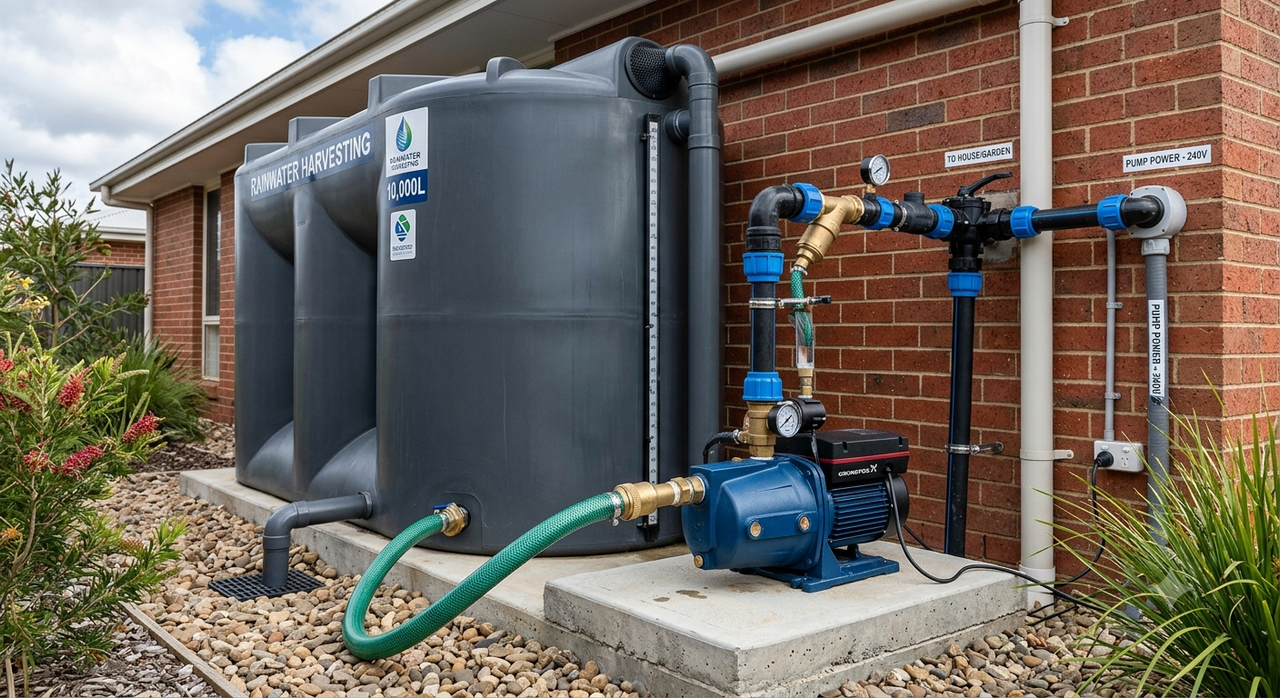
We will walk you through everything you need to know about rainwater tank pump. Whether you’re setting up a system for your home, business, or agricultural property, you’ll discover which pump types work best for different situations. We’ll cover sizing requirements, energy efficiency, installation tips, and how to troubleshoot common problems. By the end, you’ll have the confidence to make an informed decision that saves you money and headaches down the track.
Understanding Rainwater Tank Pump Basics
So, how does a rainwater tank pump actually work? In simple terms, it draws water from your tank and pressurises it so you can use it throughout your property. When you turn on a tap or irrigation system, the pump kicks into action, pulling water through an inlet pipe and pushing it through your plumbing at the right pressure.
What Size Pump Do I Need for My Rainwater Tank Pump?
This is one of the most common questions, and the answer depends on your specific needs. For a standard household, you’ll typically want a pump delivering around 40-60 litres per minute with pressure between 200-400 kPa. Commercial and agricultural applications usually require higher flow rates sometimes exceeding 100 litres per minute. Consider how many outlets might run simultaneously and the distance water needs to travel. A larger property or multi-storey building will need a more powerful pump to maintain consistent pressure.
Types of Rainwater Tank Pump Explained
Submersible pumps sit inside your tank, completely underwater. They’re quiet, space-saving, and excellent for tanks with limited surrounding space. Plus, the water helps keep them cool during operation. However, maintenance can be trickier since you’ll need to access the tank to inspect or repair them. They work brilliantly for underground tanks or situations where noise is a concern.
External surface pumps, on the other hand, sit outside your tank. They’re easier to access for maintenance and generally more powerful for larger applications. The downside? They’re noisier and require weather protection. These pumps suit situations where you need high flow rates and have adequate space for installation.
Variable Speed Pumps vs Fixed Speed Pumps
Variable speed pumps adjust their motor speed based on demand. This means they use less energy when you only need a trickle of water, ramping up when demand increases. They’re quieter, more energy-efficient, and put less strain on your plumbing. Fixed speed pumps, while cheaper upfront, run at full power regardless of how much water you need. For most residential applications, variable speed pumps offer better long-term value despite the higher initial cost.
Best Rainwater Tank Pump for Residential Use
When selecting a pump for your home, prioritise reliability and quiet operation. Nobody wants a pump that sounds like a jet engine every time someone flushes the toilet! Look for models specifically designed for domestic use, typically rated between 0.5 and 1.5 horsepower. These deliver enough pressure for showers, washing machines, and garden irrigation without overkill.
For suburban properties, noise levels matter significantly. Many modern pumps feature insulated housings and vibration-dampening mounts. Variable speed models are particularly quiet since they’re not constantly running at maximum capacity. Installing your pump on a concrete pad with rubber feet can further reduce noise transmission.
Can I Use a Rainwater Tank Pump for Drinking Water?
Absolutely, but you’ll need proper filtration and treatment. Your pump should be food-grade compatible, and you’ll want a multi-stage filtration system including sediment filters and UV sterilisation. Regular water testing ensures your supply remains safe. Many Australian households successfully use rainwater as their primary drinking water source with the right setup.
Best Rainwater Tank Pump for Commercial Use
Commercial applications demand pumps that handle higher volumes and operate reliably day after day. Businesses typically need flow rates of 60-150 litres per minute, depending on usage patterns. Multi-storey buildings present additional challenges you’ll need enough pressure to push water to upper floors, often requiring pumps rated at 400 kPa or higher.
Reliability becomes critical in commercial settings where downtime costs money. Consider dual-pump systems that provide backup capacity and allow maintenance without shutting off water supply. Stainless steel components resist corrosion and extend service life, particularly important in demanding environments.
Best Rainwater Tank Pump for Agricultural Use
Farms present unique challenges large areas to cover, high volumes needed, and often limited power availability. Agricultural pumps must handle demanding applications like irrigation systems, livestock watering, and transferring water over considerable distances. Flow rates of 100+ litres per minute are common requirements.
How Far Can a Rainwater Pump Push Water?
This depends on pump power and pipe diameter, but quality agricultural pumps can push water several hundred metres horizontally. Vertical lift (pumping water uphill) is more challenging expect around 30-50 metres of head pressure from standard pumps. For longer distances, consider multiple pump stations or higher-powered units specifically designed for agricultural transfer.
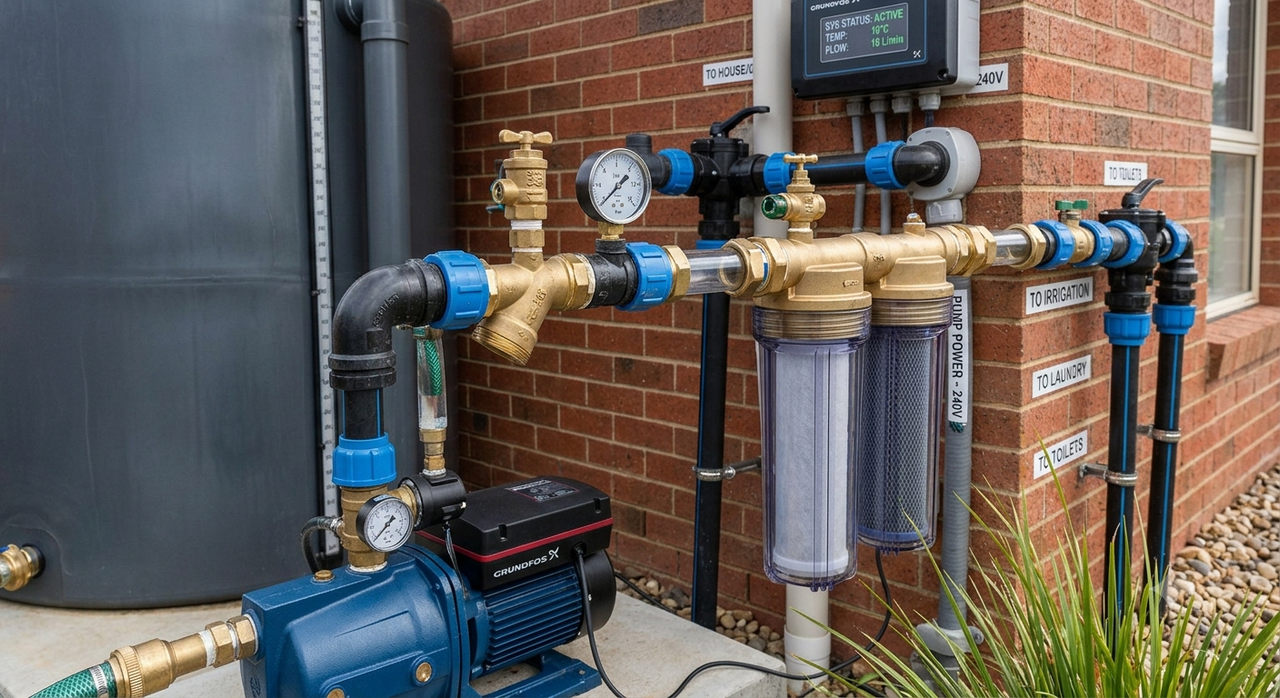
Factors to Consider When Choosing a Rainwater Tank Pump
Flow rate requirements vary dramatically between applications. Calculate your peak demand by considering how many outlets might operate simultaneously. A household typically needs 30-50 litres per minute, while farms may require 100+ litres per minute.
Installation and Setup Essentials
While handy homeowners can manage basic installations, complex setups benefit from professional expertise. Incorrect installation voids warranties and can damage equipment. At minimum, have a licensed plumber check your work before commissioning the system.
Do I Need a Pressure Tank with My Rainwater Tank Pump?
Pressure tanks reduce pump cycling by storing pressurised water. This extends pump life significantly without one, your pump might start and stop dozens of times daily. For most systems, a 20-50 litre pressure tank provides adequate buffering and improves overall performance.
Common Rainwater Tank Pump Problems and Solutions
Pumps not working often trace back to simple causes. Check power supply first, then inspect the pressure switch and inlet filter. Air locks can prevent pumps from priming try bleeding the system by loosening outlet connections until water flows freely.
Maintenance Tips to Extend Pump Lifespan
Create a maintenance schedule and stick to it. Monthly tasks include checking pressure, inspecting visible connections, and cleaning inlet filters. Annually, service pressure switches, inspect internal components, and test safety features.
Choosing the Right Rainwater Tank Pump for Your Needs
Selecting the perfect rainwater tank pump comes down to matching capacity with requirements. Residential users typically need 0.5-1.0 horsepower variable speed pumps. Commercial applications demand 1.5+ horsepower with robust construction. Agricultural users should consider solar options and high-flow models designed for demanding conditions.
The investment in a quality pump pays dividends through reliable service, lower running costs, and reduced maintenance headaches. Don’t compromise on build quality to save a few dollars upfront cheap pumps often cost more in the long run through repairs and premature replacement.

