


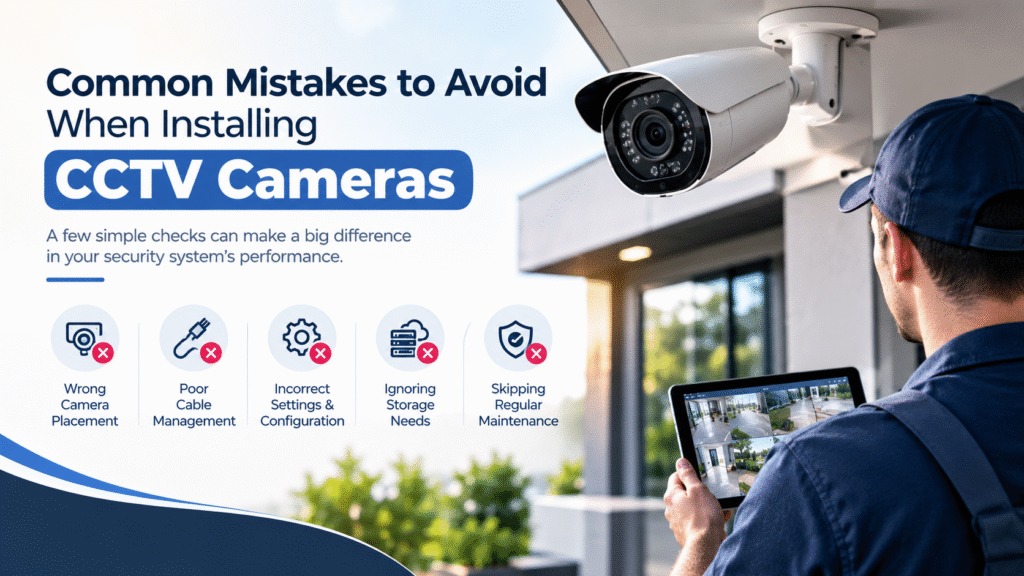
Installing CCTV cameras is an important step toward improving the protection of commercial properties, offices, warehouses, retail stores, and industrial facilities. A well-planned camera system can help businesses monitor important areas, review unusual activity, and maintain better visibility across their premises. However, simply purchasing high-quality cameras does not guarantee effective monitoring. Poor placement, incorrect equipment selection, and inadequate system configuration can reduce coverage and leave important areas unmonitored.
Understanding common installation mistakes helps business owners make informed decisions and get greater value from their surveillance equipment. From evaluating camera angles and lighting conditions to planning recording storage and network connectivity, every detail can influence system performance. A thoughtful installation approach helps create a dependable monitoring solution that supports day-to-day operations and the protection of business assets.
1. Installing Cameras Without a Proper Site Assessment
One of the most common mistakes is installing cameras before evaluating the property’s layout and monitoring requirements. Businesses may place cameras wherever installation appears convenient without identifying important entrances, vulnerable areas, loading docks, parking facilities, or restricted rooms.
During the planning stage, businesses should also consider how surveillance cameras will work alongside other entry management equipment. Video intercom system installation can be considered for reception areas, visitor entrances, and controlled access points, allowing staff to communicate with visitors before granting entry. Assessing these requirements in advance helps businesses plan equipment placement, reduce coverage gaps, and create a more coordinated approach to property monitoring.
2. Choosing the Wrong Type of CCTV Camera
Not every camera is suitable for every environment. A camera designed for a small indoor office may not provide the weather resistance, viewing distance, or low-light performance needed for an outdoor loading area.
Fixed cameras are useful for monitoring specific locations, while pan-tilt-zoom cameras can adjust their viewing direction where appropriate. Outdoor cameras may need suitable protection against rain, dust, and temperature changes. Businesses that require detailed identification should also consider image resolution, lens selection, and the distance between the camera and the monitored area.
Selecting equipment based on the property’s actual requirements helps ensure that the system provides useful footage rather than simply increasing the number of cameras.
3. Ignoring Camera Angles and Blind Spots
Incorrect camera positioning can significantly reduce the usefulness of surveillance footage. Cameras placed too high, facing the wrong direction, or obstructed by walls, shelves, signs, and other objects may fail to capture important details.
For example, a camera positioned directly toward a bright window may produce images with poor visibility because of glare or strong backlighting. Similarly, a camera covering a large area from too far away may not capture sufficient detail for reviewing specific incidents.
During installation, each camera’s field of view should be checked under realistic operating conditions. Businesses should verify that important areas are visible, overlapping coverage is provided where necessary, and obstructions do not interfere with monitoring.
4. Overlooking Lighting Conditions
Lighting plays a major role in CCTV image quality. A camera that performs well during daylight may produce unclear footage at night or in poorly illuminated areas. Parking lots, warehouses, delivery entrances, and building perimeters can be particularly challenging when lighting changes throughout the day.
Businesses should evaluate natural and artificial lighting before selecting cameras. Depending on the environment, low-light cameras, infrared night vision, or suitable external lighting may improve visibility. Camera placement should also account for headlights, reflective surfaces, and sudden changes in brightness.
Testing cameras during both daytime and nighttime conditions helps identify problems before the system is fully operational.
5. Neglecting Recording Storage and Retention
Installing cameras without planning how footage will be stored is another common mistake. Businesses may discover that their recording equipment cannot retain enough video for the period they require. Storage needs depend on the number of cameras, video resolution, frame rate, recording schedule, compression settings, and retention policy.
Before installation, businesses should determine how long recordings need to remain available and choose suitable storage equipment. Options may include network video recorders, local storage, or compatible cloud-based services.
It is equally important to check that recordings are being saved correctly and can be retrieved when needed. Clear retention policies help businesses manage storage capacity while following applicable privacy and data protection requirements.
6. Using Weak Network and Power Infrastructure
Modern IP-based surveillance systems rely on stable network connectivity and an appropriate power supply. Poor cabling, unreliable network equipment, insufficient bandwidth, or inadequate power capacity can cause interruptions, delayed video, and inconsistent recording.
Businesses should assess their existing network infrastructure before adding cameras. The installation plan should account for cable distances, network capacity, power requirements, and the use of suitable equipment for the environment. Where Power over Ethernet is used, switches and other components must support the connected devices’ requirements.
Proper cable management also matters. Cables should be routed and protected appropriately to reduce the risk of physical damage, accidental disconnection, and maintenance difficulties.
7. Overlooking Cybersecurity and User Permissions
CCTV systems connected to a network can create additional risks if they are not configured securely. Default passwords, outdated firmware, unrestricted remote access, and unnecessary user permissions can expose cameras or recordings to unauthorized access.
Businesses should change default credentials, use strong unique passwords, enable multi-factor authentication where available, and install software or firmware updates according to manufacturer guidance. Remote viewing should be limited to authorized users, and access permissions should be reviewed when employees change roles or leave the organization.
Network segmentation and secure configuration may also help limit exposure, depending on the system design. Protecting the digital side of surveillance is just as important as installing cameras in the correct locations.
8. Failing to Test the System After Installation
A camera system should not be considered ready simply because every camera powers on. Installation testing should confirm that live viewing, recording, playback, remote access, and any configured alerts function as intended.
Businesses should review the footage from each camera and verify that important areas remain visible at different times of day. They should also check whether recordings can be located and exported when authorized personnel need them.
Testing helps identify incorrect settings, network interruptions, storage issues, and image-quality problems before the system becomes essential to daily operations. Documentation of the installation and configuration can also make future troubleshooting easier.
9. Forgetting Regular Maintenance
Even a professionally installed CCTV system requires ongoing care. Dust, water exposure, damaged cables, loose mounting brackets, and changes to the surrounding environment can affect camera performance. Construction work, new shelving, landscaping, or building renovations may also obstruct previously clear camera views.
Businesses should establish a maintenance schedule that includes cleaning camera lenses, checking mounts and connections, reviewing image quality, confirming recording functionality, and checking available storage. Software updates and user access permissions should also be reviewed periodically.
Routine maintenance helps identify developing issues early and reduces the likelihood of discovering a problem only after an incident occurs.
10. Ignoring Privacy and Legal Requirements
Commercial surveillance should be designed around legitimate monitoring needs while respecting the privacy of employees, customers, contractors, and visitors. Installing cameras without considering applicable requirements can create complaints, legal concerns, and unnecessary collection of personal information.
Businesses should identify the purpose of monitoring, choose camera locations carefully, and avoid recording sensitive areas where surveillance would be inappropriate. Depending on local laws, they may need to provide notices, establish retention limits, and control who can view or share footage.
Recorded video should be handled responsibly and disclosed only when there is a legitimate and lawful reason. Clear policies help employees understand how surveillance is used and how footage is managed.
How to Plan a More Effective CCTV Installation
Avoiding common mistakes starts with a clear installation plan. Businesses should identify their main monitoring objectives, assess vulnerable locations, and select equipment that matches the property’s size and operating conditions. Camera positions should be tested for visibility, lighting, and potential obstructions before the installation is finalized.
It is also useful to plan storage capacity, network requirements, remote access, maintenance, and future expansion at the beginning of the project. Working with experienced installation professionals can help businesses address technical requirements and coordinate the system with other equipment, including access control and intrusion detection.
For commercial premises, CCTV Camera installation should be treated as a complete system-planning process rather than a simple exercise in mounting cameras. Careful design, reliable configuration, testing, and maintenance all contribute to better monitoring and more dependable performance.
Frequently Asked Questions
1. What is the most common CCTV installation mistake?
Poor camera placement is a common mistake because it can create blind spots and reduce image usefulness. Assessing the property and testing camera angles before finalizing installation can help prevent this problem.
2. How can businesses improve CCTV footage quality?
Businesses can improve footage quality by choosing suitable cameras, positioning them correctly, addressing poor lighting, cleaning lenses, and configuring resolution and recording settings appropriately.
3. How much storage does a commercial CCTV system need?
Storage requirements depend on camera count, resolution, frame rate, recording schedules, compression, and the desired retention period. Businesses should calculate their requirements before selecting storage equipment.
4. Should CCTV cameras be checked after installation?
Yes. Testing should confirm that cameras capture the intended areas, recordings are saved properly, playback works, and remote access functions securely where enabled.
5. Can CCTV cameras work with access control systems?
Yes. Compatible systems can be coordinated so that authorized personnel can review video activity around controlled entry points. The exact capabilities depend on the equipment and system integration.
Conclusion
Avoiding common CCTV installation mistakes helps businesses develop a more reliable and practical monitoring solution. Proper site assessment, appropriate camera selection, careful positioning, suitable lighting, adequate recording storage, and dependable network infrastructure all influence system performance. Businesses should also prioritize cybersecurity, post-installation testing, regular maintenance, and responsible handling of recorded footage. By addressing these factors early, commercial property owners can reduce coverage gaps and make better use of their surveillance equipment.
Cisco Fire System provides fire protection and system solutions for residential and commercial properties. Businesses planning a CCTV project should evaluate their property layout, monitoring priorities, infrastructure, and ongoing maintenance requirements before choosing an installation approach. A carefully planned system, supported by appropriate configuration and routine checks, can help improve visibility across business premises and contribute to a more organized approach to property protection.

