


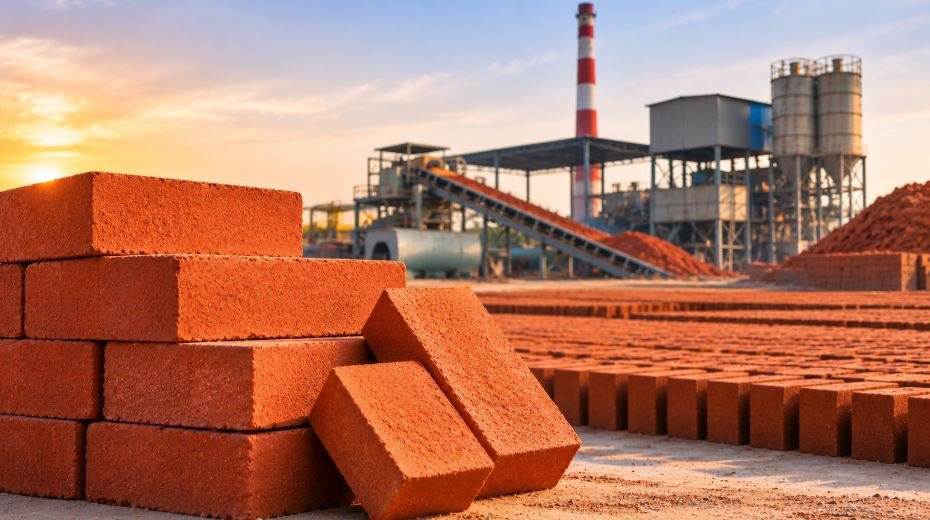
Walk onto any construction site and you will find stacks of bricks waiting to become walls. But not all bricks are equal. Some last a century, while others start crumbling within a few monsoons. The difference usually lies in how seriously the producer treats quality control.
For builders, contractors and developers, understanding how quality is maintained at the source makes it much easier to pick the right supplier. This article explains the practices that good producers follow and the warning signs you should watch out for.
Quality Begins with Raw Material
The best kilns in the world cannot fix poor clay. Reliable brick factories test their soil before using it. They check the proportion of clay, silt and sand, and they look for harmful elements like excess lime, alkalis and organic matter. Lime lumps can expand after firing and split the brick, while alkalis cause white patches of efflorescence on walls.
Good producers also weather their clay. Leaving dug soil exposed for weeks allows rain and sun to break it down and wash away some soluble salts. This simple step improves the final brick significantly.
Controlled Moulding
Consistency in moulding is one of the biggest markers of quality. When clay is pressed with uniform force, every brick has similar density and strength. Mechanised moulding has made this much easier. Machines produce bricks with straight edges, flat faces and accurate dimensions, which saves mortar and labour on site.
Factories that still rely on hand moulding can produce good bricks too, but they need skilled workers and strict supervision to keep size and finish uniform.
Careful Drying
Rushed drying is a common cause of cracked bricks. Quality-focused producers dry their green bricks slowly in shaded or covered areas. They stack them with enough space for airflow and protect them from sudden rain or harsh direct sun. Bricks must lose most of their moisture before firing, otherwise steam builds up inside the kiln and damages them.
Even and Monitored Firing
Firing determines strength more than any other step. Bricks need to reach and hold the right temperature, usually between 900 and 1,100 degrees Celsius. Under-burnt bricks are soft and absorb too much water. Over-burnt bricks may become distorted and brittle.
Modern kiln designs such as zig-zag and tunnel kilns help spread heat evenly through the stack. Experienced kiln operators track temperature, fuel feeding and air flow throughout the cycle. This attention to detail produces a higher share of first-class bricks in every batch.
Regular Testing
Serious producers do not rely on appearance alone. They test samples from each batch for:
- Compressive strength — how much load the brick can carry
- Water absorption — ideally below 20 percent for good burnt clay bricks
- Efflorescence — presence of soluble salts that cause white deposits
- Dimensional tolerance — how closely bricks match standard size
In India, these checks are guided by standards such as IS 1077 and IS 3495. Established brick manufacturing companies are usually happy to share test results with customers, because they have confidence in their product.
Sorting and Grading
After cooling, bricks are sorted into grades. First-class bricks have uniform colour, sharp edges, smooth surfaces and give a clear metallic sound when struck together. Second-class bricks may have slight irregularities and are suitable for less critical work. Damaged or poorly fired pieces are removed. Proper grading means customers receive exactly what they pay for.
Simple Checks You Can Do on Site
Even without a lab, you can judge brick quality with a few quick tests:
- Ring test: Strike two bricks together. A clear ring means good firing.
- Scratch test: Try scratching the surface with a fingernail. A good brick should not leave a mark.
- Drop test: Drop a brick from about one metre onto hard ground. A quality brick should not break.
- Soak test: Weigh a dry brick, soak it in water for 24 hours and weigh it again. The weight gain should be modest.
- Visual check: Look for cracks, stones, uneven colour and chipped corners.
Warning Signs of Poor Quality
Be cautious if a supplier cannot tell you where the bricks were made, refuses a plant visit or offers prices far below the market rate. Mixed batches with very different colours often indicate uneven firing. Large amounts of broken bricks in a delivery also suggest weak product or poor handling.
Why Quality Control Pays Off
It is tempting to save a little money by buying cheaper bricks. But weak bricks increase cement usage, cause cracks and dampness, and lead to repair costs that far exceed the initial savings. Strong, well-made bricks give you cleaner walls, better insulation and a structure that lasts.
Conclusion
Quality in bricks is not an accident. It comes from good clay, careful moulding, patient drying, controlled firing and honest testing. When you choose a producer that follows these practices, you protect both your budget and the long-term safety of your building. Ask questions, visit the plant if possible and always check a sample before placing a bulk order.Walk onto any construction site and you will find stacks of bricks waiting to become walls. But not all bricks are equal. Some last a century, while others start crumbling within a few monsoons. The difference usually lies in how seriously the producer treats quality control.
For builders, contractors and developers, understanding how quality is maintained at the source makes it much easier to pick the right supplier. This article explains the practices that good producers follow and the warning signs you should watch out for.
Quality Begins with Raw Material
The best kilns in the world cannot fix poor clay. Reliable brick factories test their soil before using it. They check the proportion of clay, silt and sand, and they look for harmful elements like excess lime, alkalis and organic matter. Lime lumps can expand after firing and split the brick, while alkalis cause white patches of efflorescence on walls.
Good producers also weather their clay. Leaving dug soil exposed for weeks allows rain and sun to break it down and wash away some soluble salts. This simple step improves the final brick significantly.
Controlled Moulding
Consistency in moulding is one of the biggest markers of quality. When clay is pressed with uniform force, every brick has similar density and strength. Mechanised moulding has made this much easier. Machines produce bricks with straight edges, flat faces and accurate dimensions, which saves mortar and labour on site.
Factories that still rely on hand moulding can produce good bricks too, but they need skilled workers and strict supervision to keep size and finish uniform.
Careful Drying
Rushed drying is a common cause of cracked bricks. Quality-focused producers dry their green bricks slowly in shaded or covered areas. They stack them with enough space for airflow and protect them from sudden rain or harsh direct sun. Bricks must lose most of their moisture before firing, otherwise steam builds up inside the kiln and damages them.
Even and Monitored Firing
Firing determines strength more than any other step. Bricks need to reach and hold the right temperature, usually between 900 and 1,100 degrees Celsius. Under-burnt bricks are soft and absorb too much water. Over-burnt bricks may become distorted and brittle.
Modern kiln designs such as zig-zag and tunnel kilns help spread heat evenly through the stack. Experienced kiln operators track temperature, fuel feeding and air flow throughout the cycle. This attention to detail produces a higher share of first-class bricks in every batch.
Regular Testing
Serious producers do not rely on appearance alone. They test samples from each batch for:
- Compressive strength — how much load the brick can carry
- Water absorption — ideally below 20 percent for good burnt clay bricks
- Efflorescence — presence of soluble salts that cause white deposits
- Dimensional tolerance — how closely bricks match standard size
In India, these checks are guided by standards such as IS 1077 and IS 3495. Established brick manufacturing companies are usually happy to share test results with customers, because they have confidence in their product.
Sorting and Grading
After cooling, bricks are sorted into grades. First-class bricks have uniform colour, sharp edges, smooth surfaces and give a clear metallic sound when struck together. Second-class bricks may have slight irregularities and are suitable for less critical work. Damaged or poorly fired pieces are removed. Proper grading means customers receive exactly what they pay for.
Simple Checks You Can Do on Site
Even without a lab, you can judge brick quality with a few quick tests:
- Ring test: Strike two bricks together. A clear ring means good firing.
- Scratch test: Try scratching the surface with a fingernail. A good brick should not leave a mark.
- Drop test: Drop a brick from about one metre onto hard ground. A quality brick should not break.
- Soak test: Weigh a dry brick, soak it in water for 24 hours and weigh it again. The weight gain should be modest.
- Visual check: Look for cracks, stones, uneven colour and chipped corners.
Warning Signs of Poor Quality
Be cautious if a supplier cannot tell you where the bricks were made, refuses a plant visit or offers prices far below the market rate. Mixed batches with very different colours often indicate uneven firing. Large amounts of broken bricks in a delivery also suggest weak product or poor handling.
Why Quality Control Pays Off
It is tempting to save a little money by buying cheaper bricks. But weak bricks increase cement usage, cause cracks and dampness, and lead to repair costs that far exceed the initial savings. Strong, well-made bricks give you cleaner walls, better insulation and a structure that lasts.
Conclusion
Quality in bricks is not an accident. It comes from good clay, careful moulding, patient drying, controlled firing and honest testing. When you choose a producer that follows these practices, you protect both your budget and the long-term safety of your building. Ask questions, visit the plant if possible and always check a sample before placing a bulk order.

