


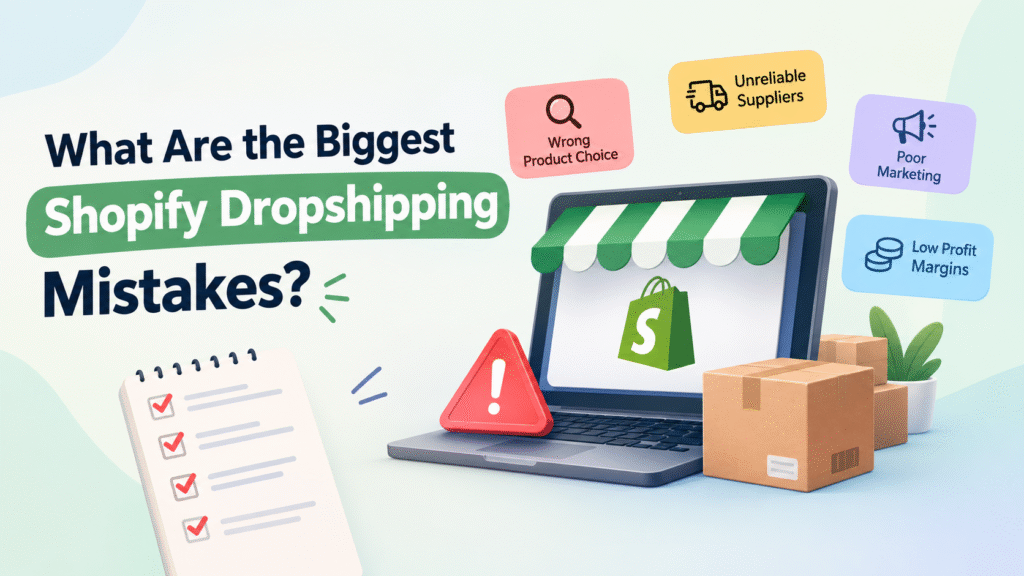
The biggest Shopify dropshipping mistakes include choosing products without proper research, working with unreliable suppliers, overlooking store design, underestimating marketing costs, ignoring profit margins, and expecting instant results. These mistakes can lead to low sales, unhappy customers, wasted advertising spend, and slow business growth.
Let’s look at these mistakes and how you can avoid them from the start with the help of this article.
Choosing Products Without Understanding the Market
Picking a product because it looks trendy is one of the easiest ways to make a poor business decision. Something may be popular online without having enough demand, sustainable interest, or healthy profit potential.
Before adding a product to your store, research your target customers, competitors, pricing, demand, and the problem the product solves. Think about who would buy it and what would convince them to choose your store.
Good product research gives you a stronger foundation and reduces the risk of filling your store with items that struggle to sell.
Relying on Unreliable Suppliers
Your supplier can directly affect your reputation. Late deliveries, inconsistent product quality, missing items, and poor communication can quickly lead to complaints and refund requests.
Do not choose a supplier based only on low prices. Look at shipping times, product reviews, communication, return policies, inventory reliability, and fulfillment standards.
Ordering samples before committing can also give you a better idea of the product quality your customers will actually experience.
Creating a Store That Confuses Customers
A customer should not have to work to understand what your store sells or how to make a purchase. Complicated navigation, weak product descriptions, cluttered pages, and poor visuals can make visitors leave before they even consider buying.
A professional shopify website design should make your store easy to explore and easy to trust. Keep the layout clean, organize products logically, use clear calls to action, and make essential information easy to find.
Your goal is not to make the store look complicated. Your goal is to make every step of the shopping journey feel natural.
Overlooking Small Details That Affect Sales
Sometimes, the biggest problems are the ones that seem too small to matter.
A missing return policy or a broken button might not seem like a serious issue, but these details can influence trust and prevent customers from completing a purchase.
Before launching, review important areas such as:
- Product descriptions and images
- Shipping and return information
- Pricing and additional fees
- Navigation and internal links
- Contact information
- Mobile responsiveness
- Checkout functionality
- Page loading speed
Treating Marketing as an Afterthought
Opening a store does not automatically bring visitors. One of the most common mistakes beginners make is assuming customers will discover the business without a clear marketing strategy.
Start by identifying where your ideal customers spend their time. That could be social media platforms, search engines, email, online communities, or paid advertising channels.
Your messaging matters too. Instead of simply listing product features, explain the benefits, address customer problems, and give people a clear reason to pay attention.
Strong marketing is not just about getting traffic. It is about attracting the right traffic.
Miscalculating Costs and Profit Margins
Revenue can look impressive on paper while your actual profit remains surprisingly small.
For every product, consider supplier costs, payment processing fees, advertising expenses, discounts, refunds, platform costs, and other operating expenses. Without this calculation, you may end up selling more while earning less than expected.
Set realistic margins before you launch. Knowing your numbers helps you decide which products are worth promoting and how much you can afford to spend on customer acquisition.
A profitable store needs more than sales. It needs healthy economics behind those sales.
Expecting Results Too Quickly
Fast success stories can create unrealistic expectations. You may see someone claim they built a successful store in a short period and assume your own business should grow at the same speed.
Realistically, Dropshipping in shopify requires research, testing, patience, and continuous improvement.
Your first product may not work. Your first advertisement may miss the target audience. Your first store layout may need several changes.
Treat these outcomes as feedback rather than failure. Study the results, make adjustments, and use what you learn to make your next decision better.
Skipping the Learning Process
Trying to build a store without understanding how the business works can make every decision harder. You may know how to add products but still struggle with pricing, supplier management, customer service, marketing, or performance tracking.
A structured Dropshipping course can help you understand these areas in a logical order instead of relying on disconnected advice from different sources.
One course that covers the essential foundations of building a successful dropshipping business is Shopify Dropshipping Mastery: Start Your Online Store. It provides a structured approach to understanding how dropshipping works and helps learners build the knowledge needed to start and manage an online store.
The course stands out with its practical approach to setting up a Shopify store, finding products, working with suppliers, managing orders, creating marketing strategies, and understanding key business fundamentals. You will learn how to build your store, identify opportunities, optimize operations, and develop strategies to grow your dropshipping business.
Ignoring the Technical Side of the Store
A store needs more than attractive product pages. Its structure, functionality, integrations, mobile experience, and overall performance also affect the customer journey.
Understanding the basics of shopify website development can help you recognize technical issues and make better decisions when improving your store.
As your business grows, you may need additional features or changes to support customers and manage operations more efficiently. A solid technical foundation makes those improvements easier to handle.
Trying to Do Everything Without a Plan
Beginners often jump between product research, website changes, social media posts, advertisements, supplier searches, and pricing decisions without a clear process.
That can quickly become overwhelming.
Start with a simple plan. Define your target customer, research products, evaluate suppliers, build the store, calculate your costs, and then develop your marketing strategy.
A Shopify full course can also help you connect these different areas and understand how they fit together as part of one ecommerce process.

