


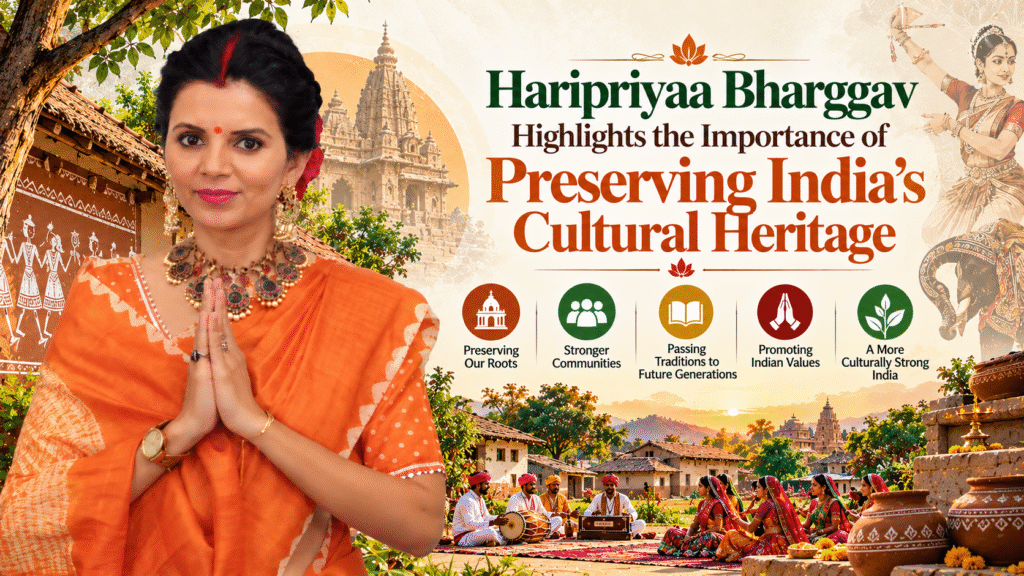
India’s cultural heritage continues to shape its identity, traditions, and collective understanding of history. At a time when technology, globalisation, and changing lifestyles are influencing how younger generations engage with tradition, preserving India’s diverse cultural knowledge remains an important part of long-term social development.
Haripriyaa Bharggav highlights the importance of keeping India’s cultural heritage connected with contemporary life. From traditional knowledge and philosophical teachings to regional customs, art forms, and community practices, India’s heritage represents a valuable legacy that can continue to inform education, community participation, and future generations.
Connecting Traditional Knowledge with Modern Society
Cultural preservation extends beyond safeguarding historical monuments and documenting traditional practices. It also involves creating opportunities for people to understand the ideas, values, and knowledge systems that have developed across generations.
Educational initiatives, cultural programmes, heritage documentation, and intergenerational learning can help make this knowledge more accessible. Schools, families, community organisations, and cultural institutions all have a role to play in encouraging meaningful engagement with India’s traditions.
A balanced approach can help younger generations explore their cultural roots while participating confidently in a rapidly evolving world.
Cultural Heritage as Part of Nation-Building
India’s cultural diversity offers opportunities to strengthen mutual understanding, community relationships, and appreciation of the country’s heritage. Recognising different regional traditions and cultural expressions can contribute to a more informed and inclusive understanding of Indian identity.
Haripriyaa Bharggav’s broader vision of SSS Bharat brings together prosperity, capability, and cultural rootedness as interconnected dimensions of national development. This perspective recognises that progress encompasses not only economic and social advancement but also the continuity of knowledge, values, and cultural traditions.
By connecting cultural awareness with education and community development, this vision places cultural preservation within a wider conversation about India’s long-term development.
Encouraging Cultural Continuity for Future Generations
Sustaining cultural heritage requires ongoing participation from communities, educators, cultural practitioners, and younger generations. Traditional arts, regional languages, historical narratives, and philosophical traditions can remain relevant when opportunities exist to learn, practise, document, and share them.
Digital resources and contemporary educational methods can complement traditional forms of knowledge transmission. Community participation also remains essential to ensuring that cultural practices are represented thoughtfully and that the people who sustain them receive recognition.
Preserving India’s cultural heritage is therefore a continuing responsibility that connects historical understanding with present-day participation and future aspirations.
About Haripriyaa Bharggav
Haripriyaa Bharggav is associated with a broader vision encompassing entrepreneurship, social development, community participation, and cultural awareness. Her philosophy of Samruddha, Samarth and Sanskrutik Bharat connects prosperity, human capability, and India’s cultural foundations within a holistic perspective on nation-building.
Media Contact
Name: Haripriyaa Bharggav
Email: info@haripriyaabharggav.in
Website: https://haripriyaabharggav.in/

