


Septic Tank Pumping in Montgomery, GA is one of those things nobody thinks about until the toilet backs up at the worst possible time. This post walks you through timing, cost, warning signs, and what actually happens when the truck pulls up to your house.
Why This Even Matters If You’re In Montgomery
So here’s the thing. A lot of people move here from cities and just assume their house works like a city sewer. It doesn’t. If you’ve got a septic tank, that thing is 100% your responsibility, not the county’s, not anybody else’s. And Montgomery’s red clay soil doesn’t behave the same as sandy soil you might be used to from somewhere else.
I’ve met homeowners who lived in their house for seven, eight years and never had the tank touched. Not once. That’s genuinely scary when you think about it. Between the heat, the humidity, and how hard it rains here some months, your system is working overtime whether you realize it or not. You kind of have to pay attention, or it’ll let you know the hard way.
So How Often Should You Actually Pump It
Everybody says every 3 to 5 years and sure, that’s a fine starting point. But it really depends on your tank size and how many people are flushing toilets and running dishwashers under your roof. A big family crammed into a small tank is a whole different situation than two retirees in that same tank.
Honestly my advice, don’t guess. Figure out your tank size, think about your household, and do the math instead of just picking a random number you heard somewhere. Waiting too long is probably THE most common mistake I see. Solids pile up, the drain field gets clogged, and now you’re not talking maintenance anymore, you’re talking repair bills.
Warning Signs People Usually Brush Off
Slow drains. That’s usually number one, and people blame it on everything except the septic tank. The garbage disposal, old pipes, whatever excuse feels easier. But if two or three drains in the house are all acting sluggish around the same time, yeah, that’s your tank trying to tell you something.
Smell is another dead giveaway, especially if it’s coming from the yard near where your tank or drain field sits. Soggy grass patches when it hasn’t rained in days? Also bad. And that gurgling sound your pipes make sometimes when you flush, that’s trapped air with nowhere to go. None of this fixes itself, by the way. It just gets worse, usually quicker than you’d expect.
What Actually Goes Down During The Pumping
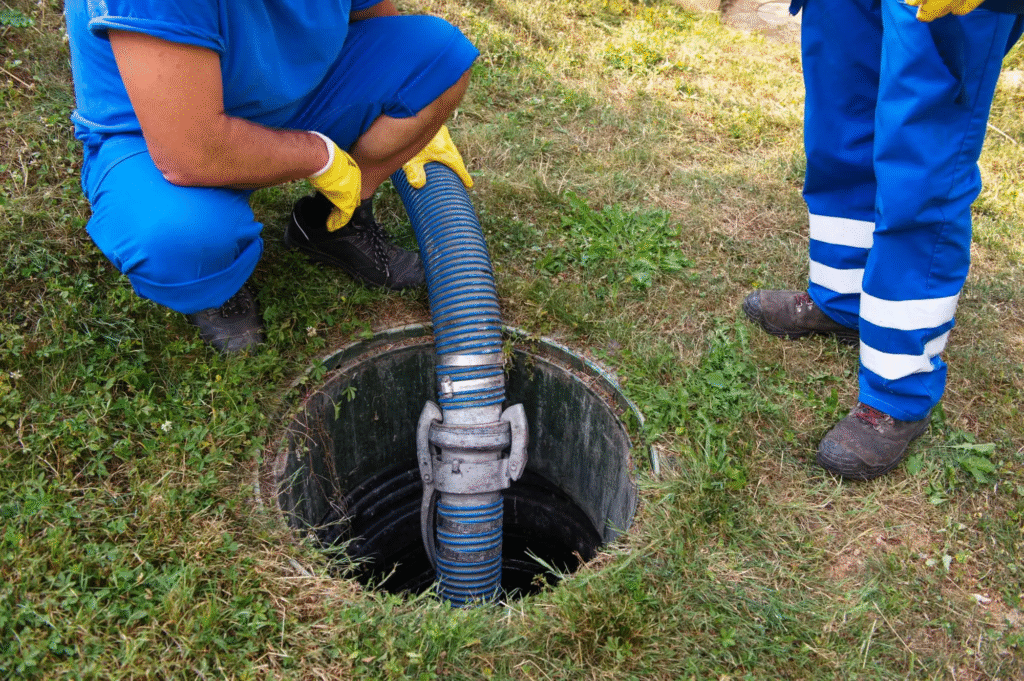
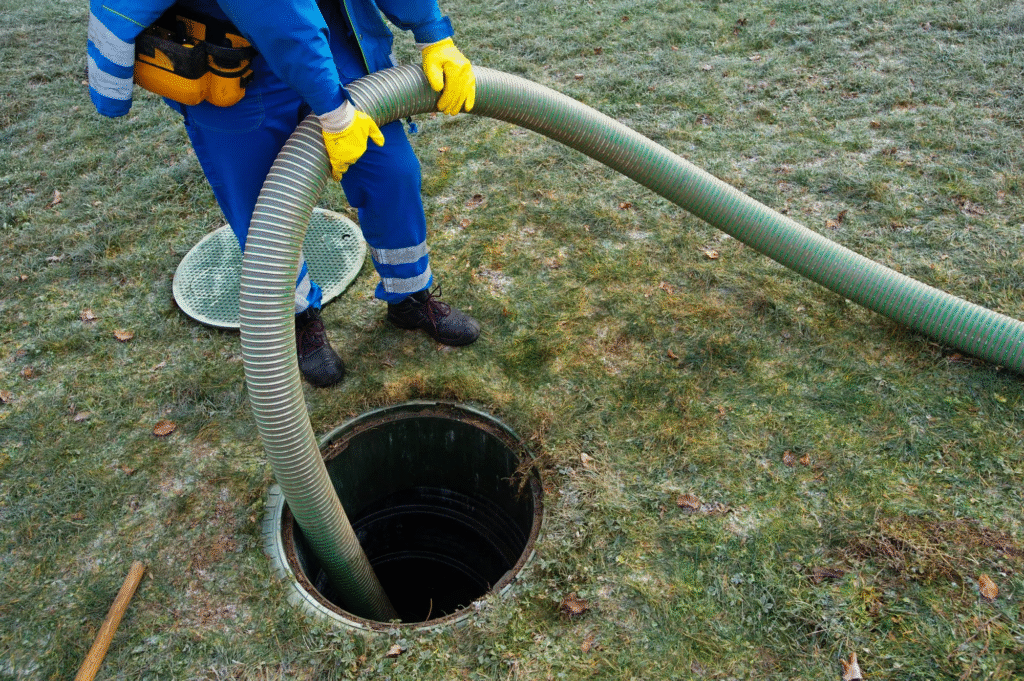
A technician shows up, finds the tank (assuming somebody knows where it is, we’ll get to that), and opens the lid. Then they hook up a vacuum truck and pull out all the liquid and solid waste sitting in there. The whole thing takes maybe 20, 30, sometimes 40 minutes depending on the tank and how full it’s gotten.
A good company won’t just pump and leave though. They’ll check the baffles, look for cracks, make sure your inlet and outlet pipes aren’t blocked up. This part matters more than people realize, pumping without inspecting is really only doing half the job. You want someone who’s actually looking at your system, not just emptying it and driving off to the next house.
Finding Where Your Tank Even Is
This trips up way more people than you’d guess. If you’re not sure where your tank sits, check the home inspection paperwork from when you bought the place, or call Montgomery County’s health department, they sometimes have records. Older homes especially can be a mystery though, no documentation at all sometimes.
A decent pumping crew can locate it with a probe or camera if it comes to that, but heads up, that might cost extra. Knowing your tank location ahead of time saves you money and a headache. It also just makes every future service call way faster and cheaper, instead of starting from zero every single time.
The Montgomery Weather and Soil Factor
Alabama humidity is rough on septic systems, more than people think. Heavy spring rains can soak the drain field and slow drainage way down. If you can time your pumping before a big rainy stretch, your system’s got more breathing room to handle the extra water without backing up on you.
That clay soil a lot of Montgomery neighborhoods sit on doesn’t drain nearly as fast as sandier soil would. Drain fields work harder here, plain and simple, and tanks can fill with solids a little quicker in certain spots around town. That’s why local experience actually counts for something, somebody who knows Montgomery dirt beats a random company driving in from three counties over.
Questions Worth Asking Before You Hire Anybody
Don’t just call whoever shows up first on Google and book blind, that’s how you end up disappointed. Ask if they’re licensed and insured here in Alabama, that one’s not negotiable. Ask what the quoted price actually covers too, because some companies sneak in extra fees for locating the tank or for disposal that they didn’t mention on the phone.
Ask if they’ve worked Montgomery homes before, since soil and setups around here aren’t exactly the same everywhere. A company worth your money should also be willing to walk you through what they found during the inspection, not just hand you an invoice and leave. If they’re dodging simple questions, take that as your answer right there.
What It’ll Probably Cost You
Prices bounce around, but most Montgomery homeowners land somewhere between 300 and 600 bucks for a standard pump job. Bigger tanks, harder access points, extra buildup, all of that pushes the number higher. And if it’s been years since the last pumping, yeah, expect to pay more because there’s just more sitting in there to deal with.
Be a little suspicious of prices that seem way too cheap, sometimes that means they’re skipping the inspection part to save time. You’re not only paying for someone to empty a tank, you’re paying for someone to catch problems early before they become a drain field replacement that costs ten times as much. Think of it less like a bill and more like insurance, honestly.
Mistakes Homeowners Keep Making
Flushing stuff you shouldn’t, wipes, grease, those “flushable” wipes that genuinely are not flushable, all of it speeds up how fast your tank fills up. Parking cars or heavy equipment over your drain field is another one, it compacts the soil and messes with the pipes underneath. People forget because it’s buried and out of sight, out of mind.
Skipping pumping because “it seems fine for now” is maybe the most expensive mistake on this whole list. Septic problems rarely announce themselves early. By the time you actually smell something or see water pooling, you’ve probably already crossed over from simple maintenance into repair territory, and that’s a much more painful spot to be in financially.
Best Time Of Year To Get It Scheduled
Spring and early summer are busy seasons for pumping, mostly because people notice slow drains after a winter of heavier indoor use. But if you can swing it, scheduling before the rainy season really hits is the smarter move. A tank with some extra room handles a big storm way better than one that’s already nearly full.
Fall tends to be a decent sweet spot too, less demand usually means more flexible scheduling and sometimes a better price. Whatever season you pick though, don’t wait until there’s an obvious problem staring at you. Being ahead of it puts you in control, instead of scrambling to find someone available on a Saturday because your yard smells awful.
Conclusion
Booking septic tank pumping in Montgomery really isn’t that complicated once you know what signs to watch, when to get it scheduled, and what to actually ask a contractor before they show up. Pay attention to your yard, your drains, and don’t skip service just because everything seems fine right now. Staying ahead of this stuff is always cheaper, and way less stressful, than waiting around for Septic System repairs down the line. A little attention today saves you a lot of grief later, that’s really the whole lesson here.
FAQs
How often should Montgomery homeowners pump their septic tank?
Most homes do fine on a 3 to 5 year cycle, but your household size and tank size can shift that quite a bit either way.
What happens if I wait too long between pumpings?
Solids build up, your drain field clogs, and what should’ve been routine maintenance turns into a much pricier repair job.
Does Montgomery’s soil really make a difference?
Yeah, it does. The clay-heavy soil around here drains slower than sandy soil, so drain fields end up working harder than they would elsewhere.
How much should I expect to pay for septic pumping in Montgomery, GA?
Usually somewhere between 300 and 600 dollars, though neglected tanks or bigger systems can run higher than that.
What are the clearest warning signs my tank needs attention?
Slow drains, bad odor outside, soggy yard spots, and gurgling pipes are the big ones people usually notice first.

