


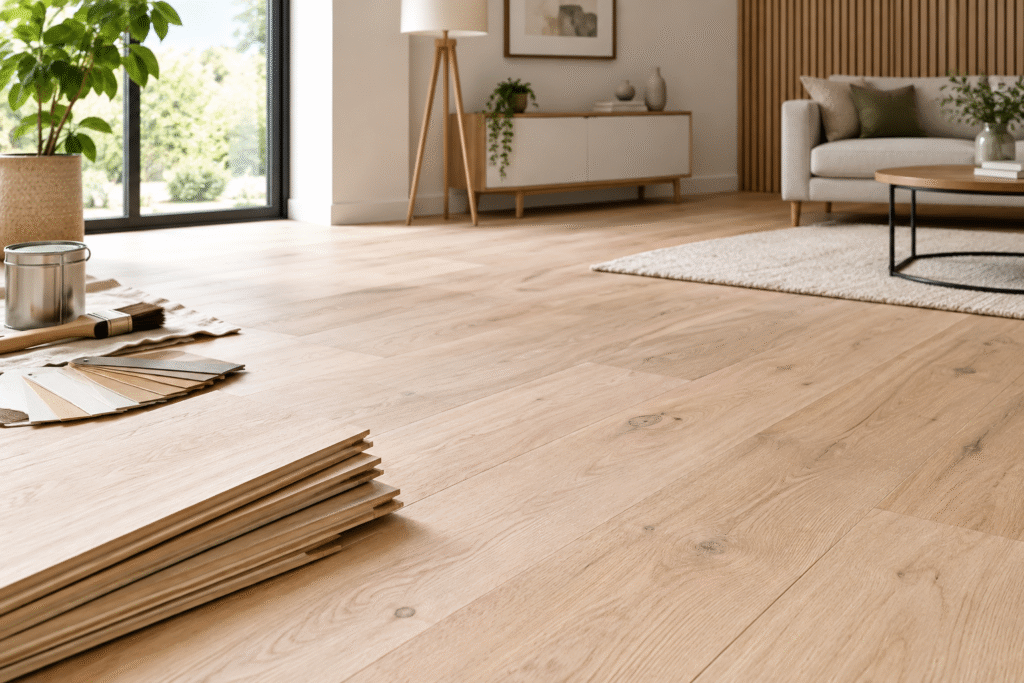
When designing a nice-looking interior, flooring is more than a practical surface; it sort of guides everything. It sets the vibe for the whole room, affects the general visual feel, and gives you that solid base for furniture, colours, and decor. While prefinished flooring can be really convenient, unfinished engineered flooring gives you something that’s getting more valuable in today’s interior design: the ability to craft a proper personalised look.
From natural oak tones to deep, dramatic stains, unfinished flooring lets homeowners, architects, and interior designers tweak the planks so they match their own vision. And once you pair it with striking layouts like herringbone, it suddenly feels like there are more pathways to build elegant, timeless interiors.
So let’s see how unfinished engineered flooring can turn ordinary rooms into custom design statements.
What Is Unfinished Engineered Flooring?
Unfinished engineered flooring is basically real wood veneer or a hardwood wear layer bonded onto a multi-layer engineered core. Unlike pre-finished flooring, it arrives without the final factory-applied surface finish. That means the wood can be sanded where it makes sense, then stained, then finished after it’s installed.
This style usually brings more control over colour choices, gloss levels, and surface treatments overall. Depending on the wood species and the product details, you can end up with a light, natural mood or a darker, more elegant finish.
There’s also a practical upside: engineered construction can offer better dimensional stability compared with solid wood when indoor conditions shift. Still, real-world results depend on the exact build, how it’s installed, and the surrounding environmental conditions.
For people who want that authentic wood character but also want creative freedom, unfinished flooring feels like a very sensible option.
1. Create a Floor That Matches Your Personal Style
One of the best things about unfinished engineered flooring is that you can shape how it will look in the end. Rather than being stuck with a narrow set of colours that are applied at the factory, you can team up with a flooring specialist to get a look that sits well with your interior.
If your home is minimalist, a light stain or natural oak can give you a bright, calm atmosphere. For modern spaces, cooler browns or greige tones often feel more balanced, and in more traditional rooms you can lean into warmer honey or even walnut-inspired shades.
Even the sheen matters, like a lot. A matte finish tends to feel easygoing and natural, while a satin finish gives a gentle, almost refined glow.
Custom staining is a smart way to line up the floor with cabinetry, wall colours, furniture, and the small architectural bits you notice later. Still, stain outcomes aren’t always identical because they depend on the wood species, the grain, and the preparation. So, it’s really worth testing samples first before you commit to the whole area.
2. Add Architectural Character with Herringbone Patterns
Colour is only half the story for a floor design that actually works. The installation pattern and how the planks sit together can really change how a room feels and reads.
For spaces that want visual energy without loud colours or heavy decoration, herringbone engineered wood flooring is a go-to choice. The rectangular planks are laid in that well-known zigzag pattern, adding movement, texture, and craftsmanship you can see up close.
It tends to work beautifully in living rooms, hallways, dining areas, and bedrooms. In smaller rooms, lighter wood tones keep things airy, but darker finishes can create a bolder, more dramatic mood that feels intentional.
Because the planks are unfinished, you can choose a final colour that actually strengthens the herringbone layout. Say you go with a natural oak finish; it can highlight the wood grain. Or if you prefer a deeper brown stain, the pattern can feel more luxurious and classic.
When you’re choosing engineered herringbone flooring, think about plank dimensions, wood grade, room proportions, and the direction the pattern runs. Planning matters a lot, since installation needs careful alignment, and the preparation has to be handled properly.
3. Explore Unique Colours and Surface Finishes
Unfinished flooring feels especially good for people who want something more than the standard floor colours.
Depending on the timber species and the finishing system, there are quite a few options that can work, like:
- Natural finishes: Keep the wood’s real, genuine character and that quiet, understated beauty.
- Light stains: Make everything look softer and brighter; they fit really well in Scandinavian, modern interiors.
- Warm brown tones: Go nicely with classic furniture, neutral walls, and those traditional design choices.
- Dark finishes: Bring more depth and stronger contrast, particularly in more sophisticated modern spaces.
- Brushed textures: Bring out the grain in a clearer way and give you a more tactile surface, if the product allows it.
With these choices, it becomes easier to keep a consistent look across the whole property. For instance, the same wood species can be treated with a coordinated shade in a living room, hallway, and even in the bedroom too.
One more thing, though: the final look depends on the wood species, stain compatibility, the finishing products, and the workmanship. Always take a finished sample and view it in the actual room, under your room lighting conditions, before you commit.
4. Balance Custom Design with Everyday Practicality
Even if the flooring looks amazing, it still has to behave in real life. Engineered wood flooring gives you a real wood surface on top, with a layered core, but whether it’s a good fit for each room depends on the exact product.
Before buying unfinished engineered flooring, verify the wear-layer thickness, the allowed sanding limits, the recommended installation method, and the manufacturer’s maintenance instructions. Don’t skip that part; it matters more than people think.
The final finish matters just as much. A good protective coating helps shield the wood surface from everyday wear, but nothing truly makes wood fully scratch-proof or waterproof, unfortunately.
If you’ve got a busy household, talk through how suitable the proposed finish is for foot traffic and pets and what cleaning you actually plan to do. Areas like kitchens, or anywhere that sees moisture, need extra attention. In the end, the manufacturer’s guidance should decide if that chosen product is actually appropriate.
Especially for complicated layouts like engineered herringbone flooring, professional installation and finishing really help too.
5. Make Your Flooring Feel Like It Belongs in the Whole Interior
The best flooring picks seem to match everything in the space, instead of going head-to-head with other elements.
In modern interiors, light herringbone flooring goes nicely with neutral walls, natural textiles, and calm furniture. If you want more drama, darker flooring can play off lighter cabinetry, metallic details, and that warm glow of lighting.
Also, unfinished flooring gives designers more say over how transitions happen between rooms. By matching wood shades across nearby areas, you get that smooth, unified look. And if you choose a herringbone design with intention, it can quietly mark an entrance or a dining zone.
For open-plan homes, think about how the floor sits beside the kitchen cabinetry, the window frames, and the adjoining flooring materials. Grab samples, then compare them in the room next to the real finishes before you commit to anything final.
Frequently Asked Questions
1. What is the main benefit of unfinished engineered flooring?
The main benefit is customisation; it really lets you choose a suitable stain, colour, and protective finish after installation, so you get better control over how the finished wood flooring ends up looking. In practice, that’s the big difference.
2. Can unfinished engineered flooring be used for herringbone patterns?
Yes. You can fit suitable unfinished engineered wood planks in a herringbone arrangement and then finish them on-site. The product has to be specifically suited for the pattern and for the way the flooring will be installed. If it’s not, well, then it can feel off or just not work as intended
3. Is herringbone engineered wood flooring suitable for modern homes?
Yes. Herringbone engineered wood flooring suits contemporary, classic, and even in-between spaces. The whole “modern vs timeless” feel depends on the wood species, plank size, colour, and the protective finish you select. So basically it’s flexible.
4. Is unfinished engineered flooring better than pre-finished flooring?
Not really: neither one is automatically better. Unfinished flooring gives more room for colour and finish choices, while pre-finished flooring usually means quicker installation and a stable factory coating. Your best option depends on your design preferences, your schedule, and your budget.
Conclusion
Flooring has this power to change the entire interior, and unfinished engineered flooring gives you the chance to shape that change around your own style. From picking the right stains to engineered herringbone flooring, it creates a flexible base for spaces that feel connected and intentional
Whether you want quiet natural tones or a bold and polished finish, combining careful customisation with good quality materials can help you build a floor that matches your home for years. With the right product choice, professional fitting, and a suitable finishing system, your flooring becomes more than just a background feature; it turns into a defining element of your interior design.

